
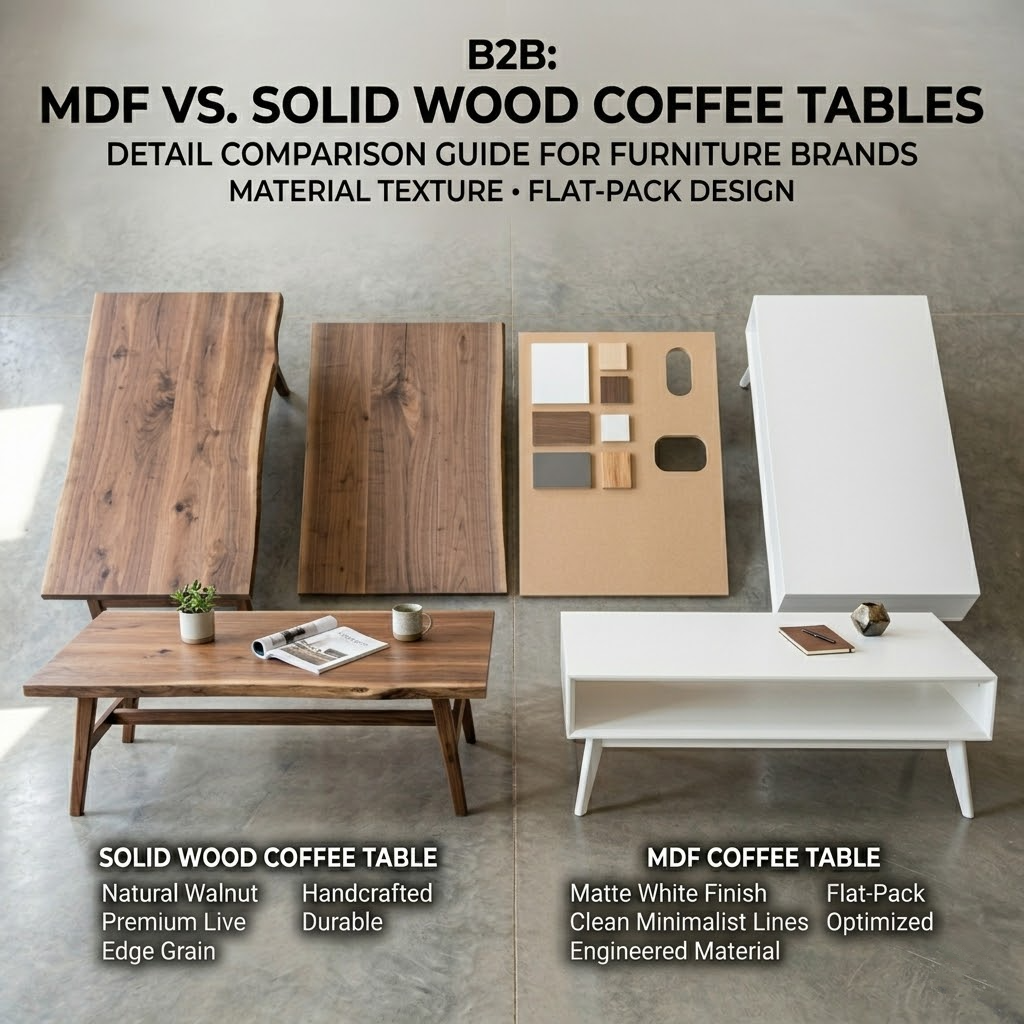
Evaluating the Core Dilemma for Furniture Buyers
For furniture procurement managers, bulk importers, and e-commerce brands, expanding a living room inventory involves a critical balancing act between structural integrity, aesthetic appeal, and supply chain logistics. When sourcing a new coffee table line, the decision frequently comes down to Medium Density Fiberboard (MDF) versus solid wood. Choosing the wrong material can lead to high product return rates, inflated freight costs, or uncompetitive retail pricing. This guide breaks down the technical, financial, and logistical variables of both materials to help you make data-driven purchasing decisions for your target market.
Market Dynamics: What Global Consumers Demand
Understanding broader industry shifts is essential before finalizing high-volume procurement contracts. According to global furniture industry estimates, the modern living room segment is experiencing a strong structural shift toward functional, space-saving configurations. Driven by the expansion of online home goods retail, international logistics costs now account for a substantial portion of a product's landed price.
Data from recent retail furniture sector surveys indicates that over 65% of online consumers prioritize scratch-resistant surfaces and clean geometric silhouettes over traditional heirloom furniture. Concurrently, environmental compliance has become a strict barrier to entry. B2B buyers targeting the European and North American markets must ensure their product portfolios utilize raw materials that strictly adhere to international environmental parameters, including high-quality FSC-certified wood boards and low-emission laminates
Technical Performance: Stability, Machining, and Structural Longevity
Dimensional Stability Under Variable Climates
Medium Density Fiberboard (MDF) is an engineered wood product manufactured by breaking down wood residuals into fine fibers, combining them with resin binders, and pressing them into dense panels under high temperature. This process yields a highly uniform internal structure free from natural defects like knots or grain deviations.
From an engineering standpoint, MDF offers exceptional dimensional stability. Unlike a wood coffee table, which inherently reacts to shifts in ambient humidity and temperature by expanding, contracting, or warping, high-grade MDF remains completely flat. This predictability makes it highly effective for precise manufacturing, particularly when engineering a complex modern coffee table with strict hardware tolerances.
Furthermore, MDF serves as an ideal substrate for advanced decorative overlays, including high-performance melamine, PVC veneers, and 3D textured wrapping
+--------------------------+-----------------------+-------------------------+
| Performance Metric    | MDF with Melamine   | Solid Wood (Oak/Pine)  |
+--------------------------+-----------------------+-------------------------+
| Dimensional Stability  | Excellent (No Warp)  | Prone to Warping    |
| Surface Consistency   | Uniform Panels    | Natural Variations   |
| Custom Shape Machining  | Highly Precise    | Grain-Dependent     |
| Relative Material Cost  | Baseline (1x)     | Premium (2.5x - 4x)   |
+--------------------------+-----------------------+-------------------------+
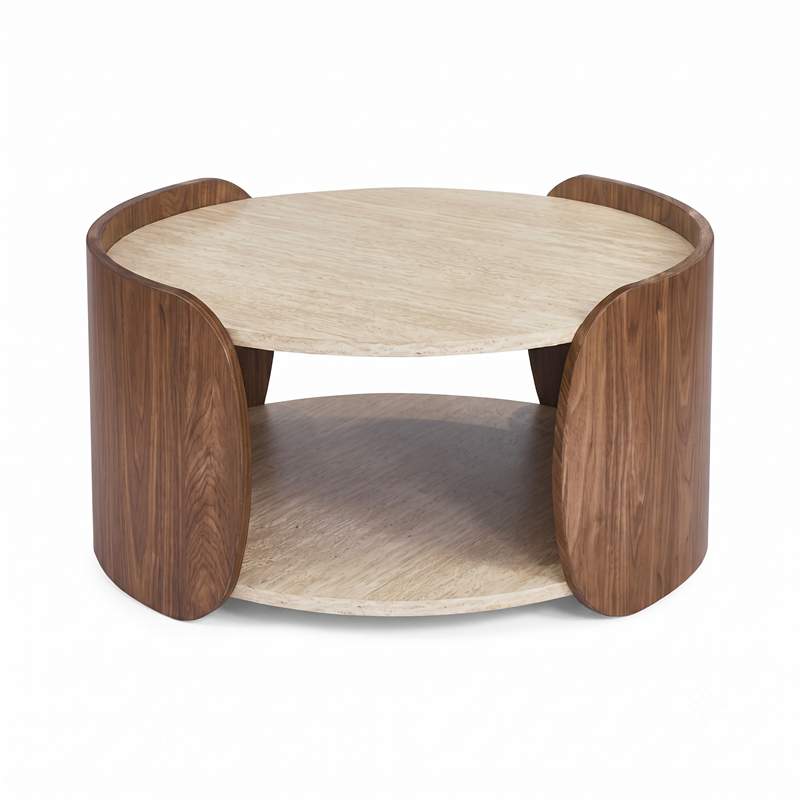
Solid wood, conversely, provides undeniable premium appeal and long-term durability. For high-end furniture collections, natural timber is often preferred for load-bearing structural components, such as the tapered legs of a contemporary sideboard or the solid base of a heavy round cocktail table
Logistical Impact: Flat-Pack Engineering and Carton Optimization
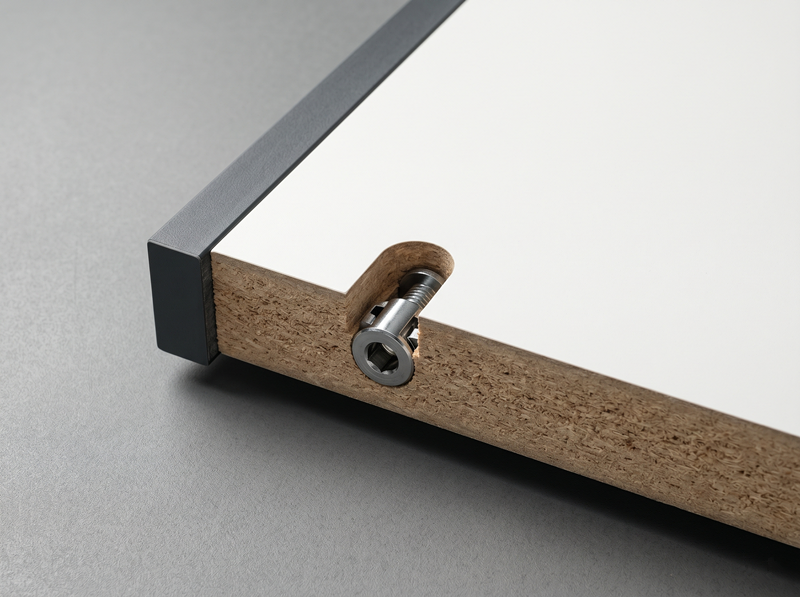
For online brands selling on international platforms, shipping efficiency directly determines profitability. Here, engineered wood options offer clear logistical advantages over solid timber. MDF panels can be precision-machined via automated automated CNC lines to accommodate specialized, knock-down (KD) flat-pack structures
A flat-pack steel-wood round coffee table or a multi-tier nesting set can be securely packed with export-grade foam edge protectors to withstand harsh final-mile parcel shipping
    [Raw Material Quality Check]
           │
           ▼
   [Pre-Production Sample Testing]
           │
           ▼
    [Automated CNC Machine Check] ──► (Ensures precise KD hardware alignment)
           │
           ▼
    [Steel-Frame / Board Fit Test]
           │
           ▼
    [Post-Packing 10-Point Drop] ──► (ISTA Standard Transit Verification)
Solid wood components can also be designed for flat-pack assembly, but natural grain variations introduce slight structural tolerances over time. To compensate, factories must use thicker, more conservative protective padding, which increases overall carton volume and raises final-mile delivery fees for e-commerce retailers.
Sourcing Benchmarks for B2B Procurement Decisions
When developing a commercial living room line, B2B buyers should establish clear engineering and manufacturing compliance benchmarks:
Material Certification: Ensure engineered wood lines specify E1 high-quality FSC-certified wood boards to seamlessly pass European regulatory and sourcing audits
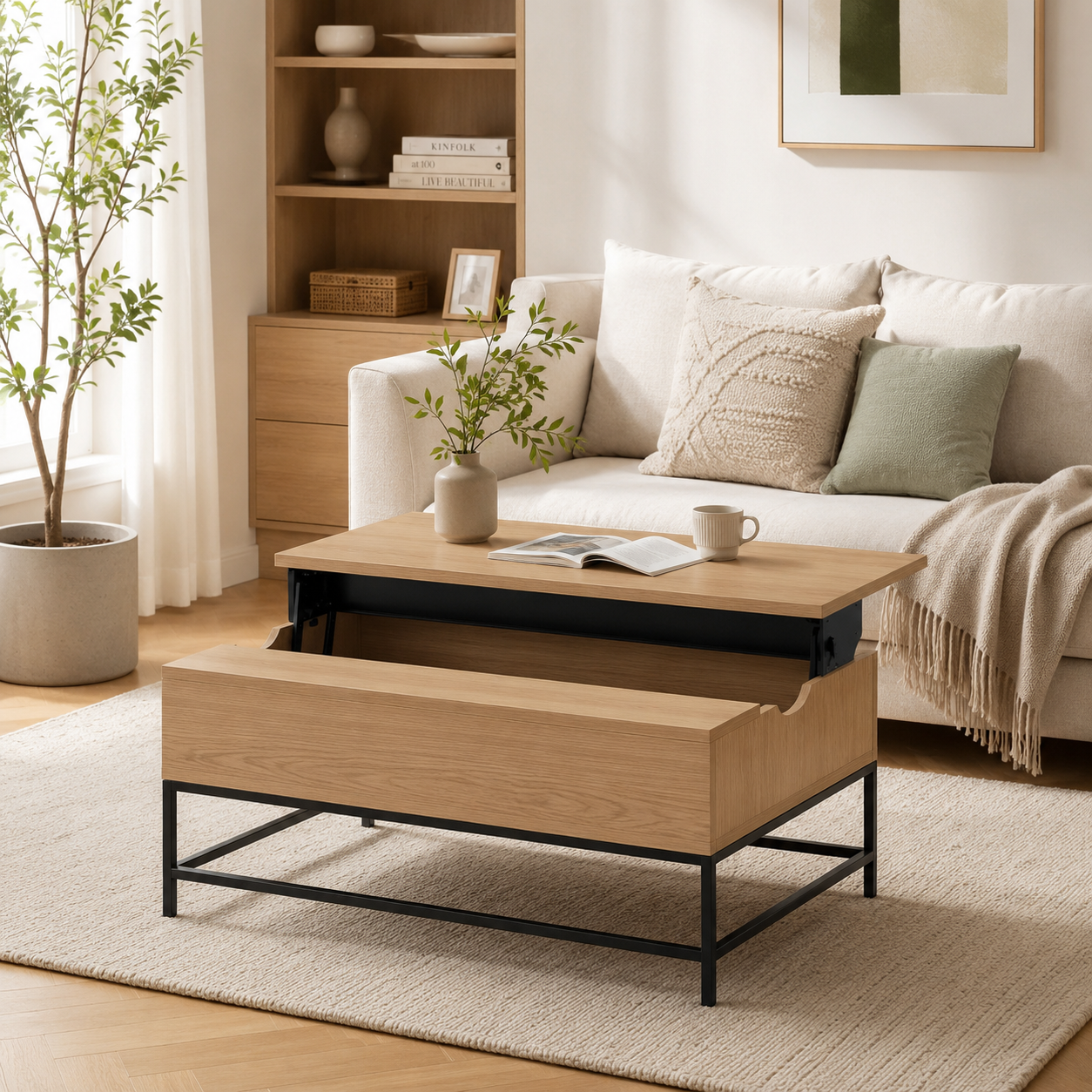
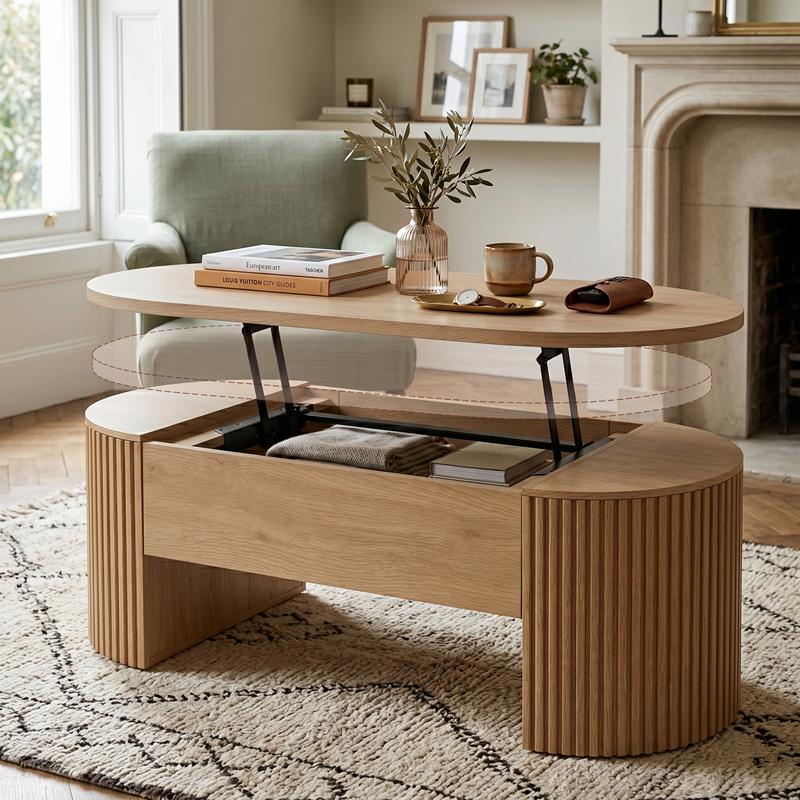
. Hardware and Functionality: If your collection features functional movement—such as a round coffee table with a integrated lift-top storage compartment—the internal mechanical hinges must feature smooth operation and reinforced structural mounting to prevent panel tear-out
. Supplier Agility: Partner with suppliers that integrate design and trade operations, offering flexible MOQs (such as 100 to 200 pieces per item) to allow for low-risk market testing, product iteration, and sustainable portfolio growth
.
FAQ: Material Sourcing & Selection
Q: Why do many e-commerce brands prefer MDF over solid wood when sourcing a round coffee table?
A: MDF provides superior dimensional stability and uniform density, meaning it will not split, crack, or warp along grain lines when cut into a round coffee table silhouette. Its composition allows automated CNC machines to cut precise joints, making it highly compatible with flat-pack structures that reduce international shipping and warehousing costs
Q: Can an engineered wood coffee table achieve a high-end look for retail furniture brands?
A: Yes. By applying premium wood-grain veneers, multi-tone finishes, or marble-effect melamine over an MDF core, manufacturers can accurately replicate the aesthetics of luxury materials
Q: What packaging requirements should B2B buyers mandate to prevent final-mile transit damage?
A: Importers should strictly require suppliers to design flat-pack packaging that complies with ISTA 10-point drop test standards
Partnering for Reliable B2B Solutions
If you are evaluating suppliers for your upcoming living room furniture launch, we are here to streamline your supply chain. We specialize in engineering market-ready, flat-pack steel-and-wood furniture solutions optimized for global e-commerce logistics and verified by rigid, multi-stage quality control systems