
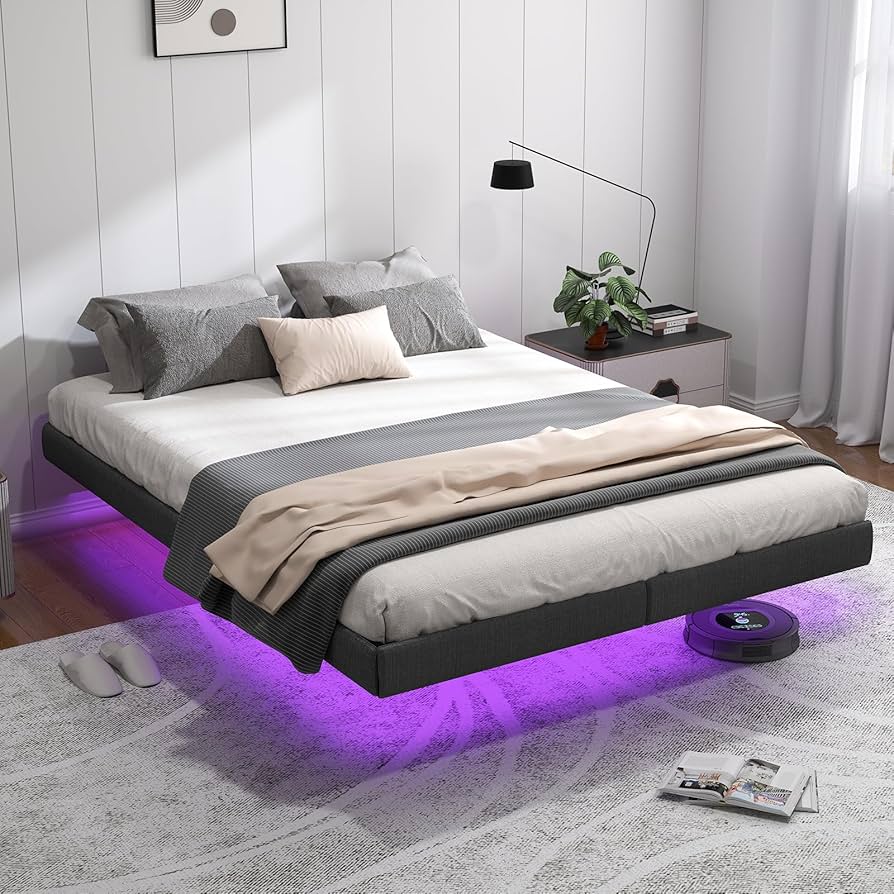
Products such as a floating full bed frame or floating bed full size model are increasingly compared with conventional platform beds when buyers evaluate new bedroom furniture programs.
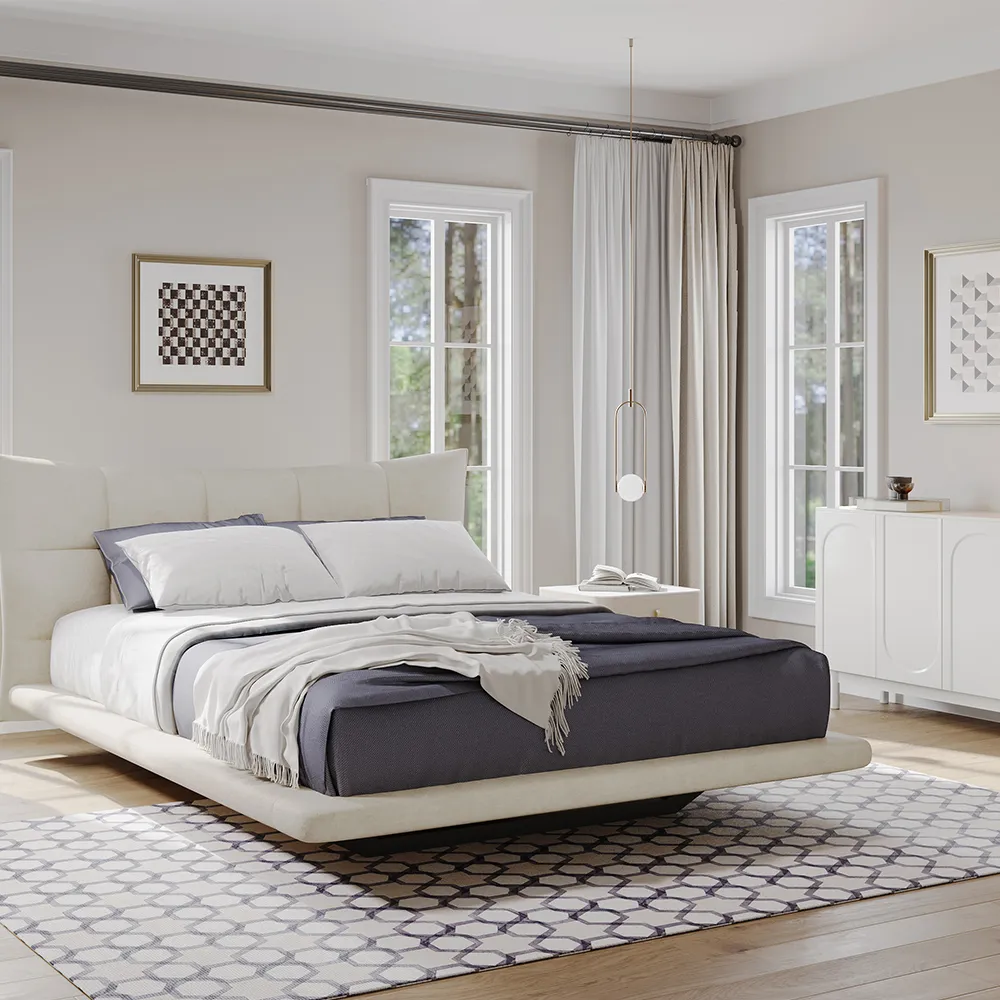
This article explains the real differences between floating and traditional bed frames from a commercial and structural perspective, helping B2B buyers decide which solution fits their market goals
Visual Impact and Market Positioning
The most obvious difference lies in presentation. A floating bed creates a visual statement that a traditional frame cannot easily replicate. The clean gap beneath a floating mattress frame gives the illusion of suspension, instantly elevating the product’s perceived value.
For online sellers, this visual strength translates directly into higher click-through rates. Variants such as a floating bed with LED lights further enhance the floating effect, especially in lifestyle images. Compared with standard beds, floating designs are easier to position as premium products without dramatically increasing material cost.
Traditional frames, by contrast, rely mainly on headboard design or surface finishes for differentiation, which can be limiting in competitive markets.
Structural Differences: Floating vs Traditional Frames
Structurally, the difference between a floating bed and a traditional bed frame lies in load distribution. A traditional frame spreads weight evenly along its perimeter, with legs visible at the corners. A floating full bed frame, however, shifts its support inward. Hidden legs or a recessed base carry the load while remaining invisible from normal viewing angles.
This internal structure is what allows a floating bed full size to remain stable while maintaining a clean silhouette. In professional manufacturing, the floating mattress frame uses reinforced steel crossbars and centralized support to prevent movement or noise over time.
While DIY floating bed concepts often appear online, these designs typically lack proper reinforcement and testing. For B2B buyers, factory-produced floating beds offer predictable performance and compliance that DIY solutions cannot deliver.
Functional Value and User Experience
From the end-user perspective, a floating bed offers more than visual appeal. The absence of visible legs reduces accidental contact, making cleaning easier and improving the sense of space in smaller bedrooms. This is one reason why floating bed full size models are increasingly popular in urban and apartment-focused markets.
Traditional frames remain reliable and familiar, but they rarely create a strong emotional response. In contrast, a floating bed with LED lights adds ambiance and differentiation without altering the core sleeping experience.
Production, Logistics, and Scalability
For B2B sourcing, scalability matters. Modern floating beds are designed for flat-pack shipping, just like traditional frames. A well-engineered floating mattress frame can be packed efficiently, keeping logistics costs under control.
In many cases, floating beds share similar material usage with traditional frames. The main difference is how the structure is assembled and reinforced. This makes floating beds suitable for OEM and private label programs where consistency and repeatability are essential.
For importers managing multiple SKUs, a single floating full bed frame platform can support different finishes, lighting options, and size variations, including full-size and larger formats.
Cost Considerations and Commercial Risk
Contrary to common assumptions, floating beds are not necessarily more expensive to produce. The perceived value of a floating bed allows brands to achieve higher retail positioning even when production costs remain competitive.
Traditional frames still serve as stable volume sellers, but floating beds provide stronger storytelling potential. For B2B buyers looking to refresh bedroom collections, combining both types can reduce risk while capturing new demand.
Which Frame Makes Sense for B2B Buyers?
The choice between floating and traditional bed frames depends on market strategy rather than technical limitations. A floating full bed frame, floating bed with LED lights, or floating bed full size offers clear advantages in visual appeal and brand positioning. Traditional frames remain dependable but less differentiated.
For B2B buyers considering product upgrades or new bedroom programs, floating beds represent a scalable and commercially proven option when engineered correctly.
If you are evaluating floating bed solutions for OEM, private label, or online retail projects, discussing structure and customization early can help align design goals with production realities.