
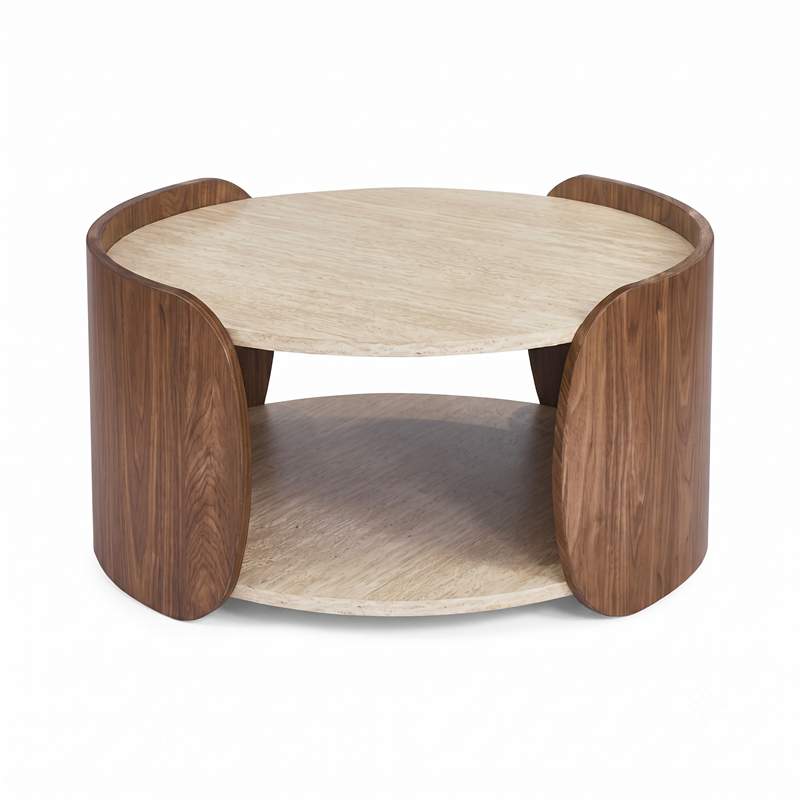
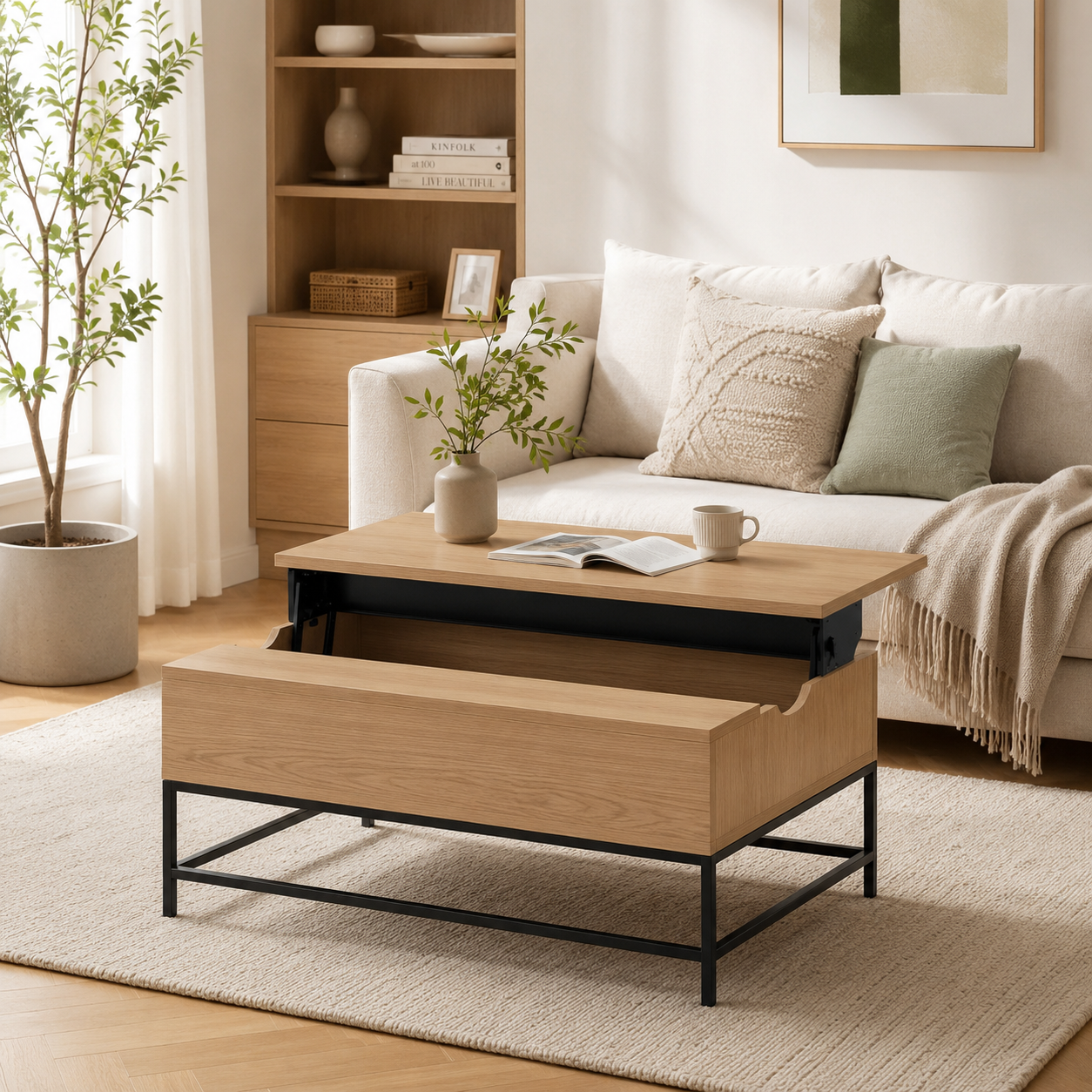
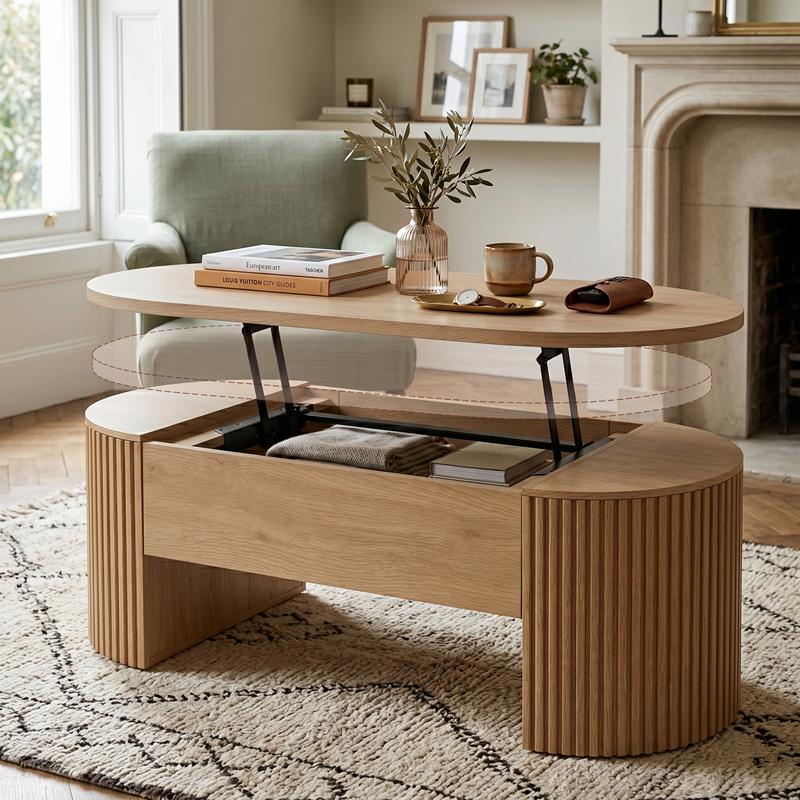
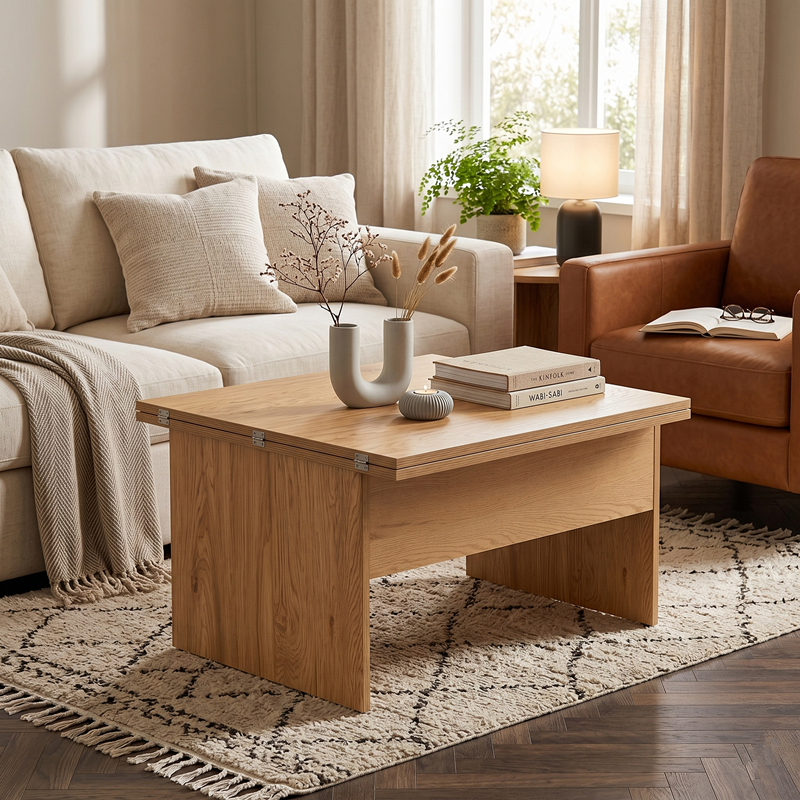
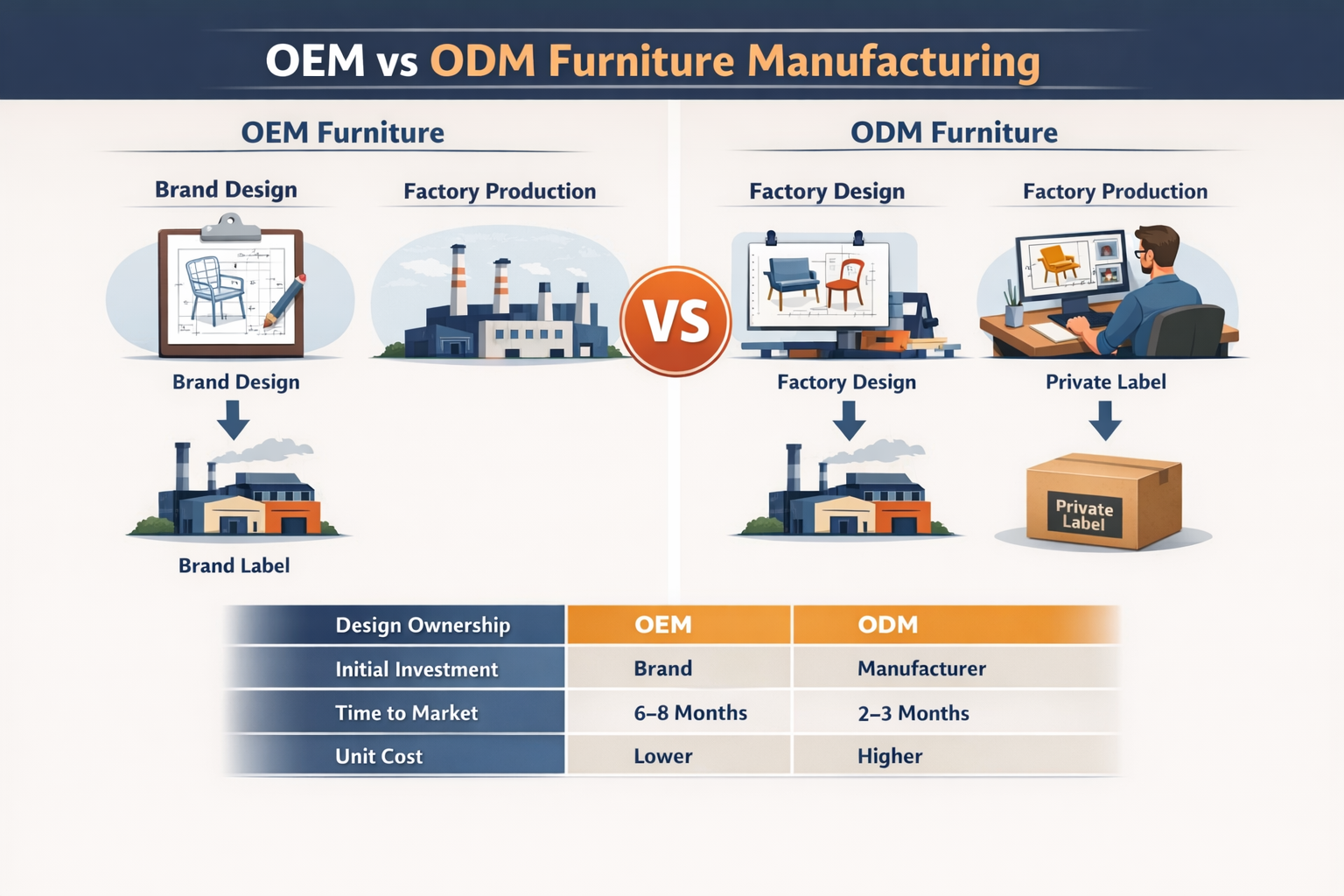
OEM furniture manufacturing
OEM furniture manufacturing is a production model in which the brand owner provides complete product design, specifications, and technical drawings, while the furniture manufacturer focuses solely on production and assembly.
ODM furniture manufacturing
ODM furniture manufacturing is a production model in which the furniture manufacturer is responsible for product design and development, and the brand sells the finished product under its own private label.
Should you choose OEM furniture manufacturing or ODM furniture sourcing?
The choice between OEM and ODM furniture production directly affects:
Initial investment
Time-to-market
Brand differentiation
Long-term profit margins
Supply chain control
This guide provides a structured, data-driven framework to help e-commerce brands determine the right furniture manufacturing strategy based on business stage, capital strength, and growth goals.
Key Difference
In OEM furniture production, design ownership belongs to the brand.
In ODM furniture production, design ownership belongs to the manufacturer.
This difference determines cost structure, product uniqueness, and long-term brand value.
OEM vs ODM Furniture: Quick Comparison
| Dimension | OEM Furniture | ODM Furniture |
|---|---|---|
| Design Ownership | Brand | Manufacturer |
| Initial Investment | High | Low |
| Tooling Cost | Paid by brand | Usually included |
| Time to Market | 6–8 months | 2–3 months |
| Unit Cost | Lower long-term | Higher per unit |
| Product Differentiation | High | Medium |
| Suitable For | Established brands | Startups & fast sellers |
Cost Structure Comparison
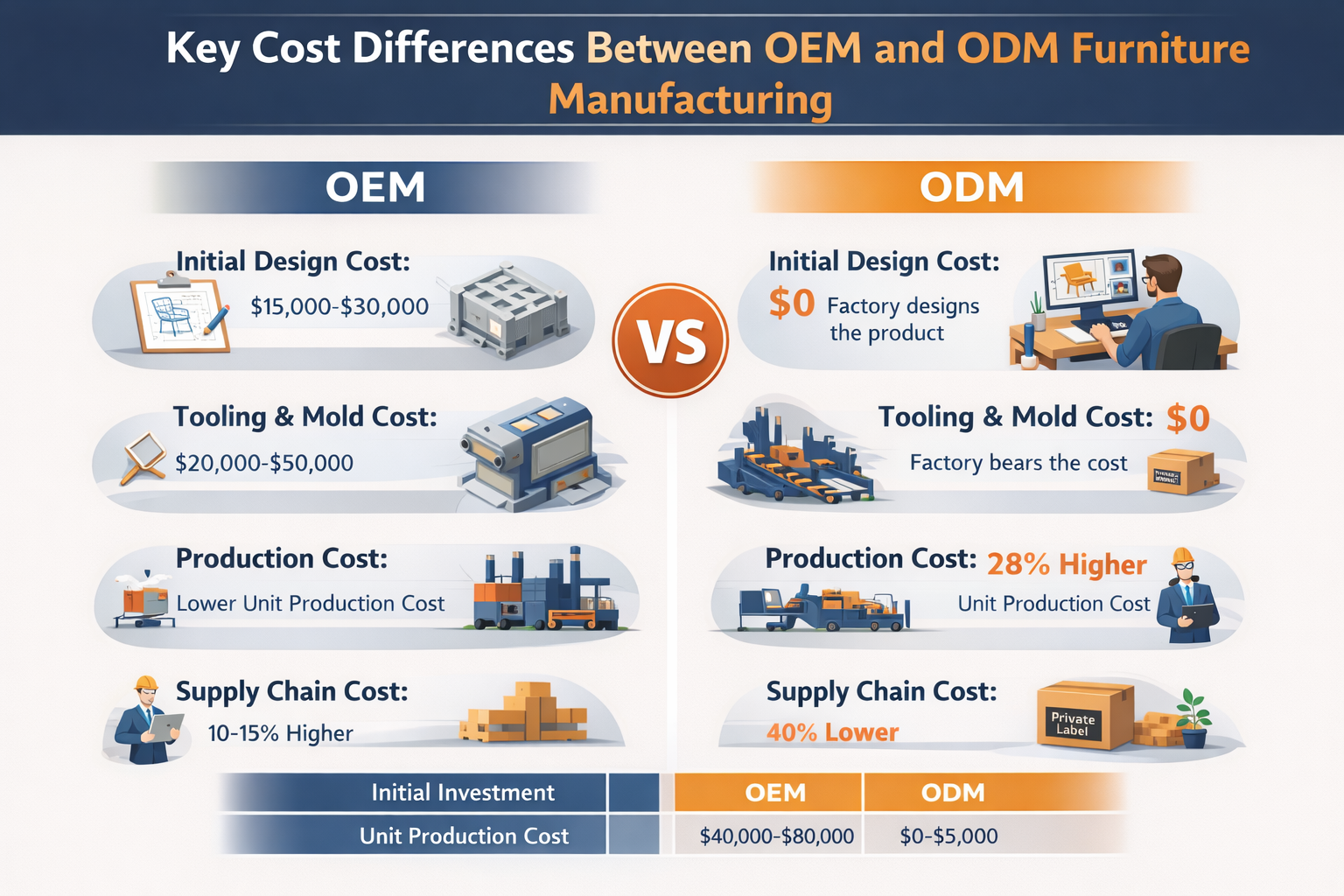
OEM Furniture Manufacturing Costs
Product design cost: $15,000–$30,000
Tooling & mold cost: $20,000–$50,000
Lower long-term unit production cost
Higher supply chain management involvement
ODM Furniture Manufacturing Costs
No product design cost
Tooling typically amortized by manufacturer
Higher unit production cost
Lower management complexity
Summary
OEM furniture requires higher upfront investment but delivers stronger brand control and lower long-term unit costs.
ODM furniture minimizes initial risk and accelerates entry into the market.
Time-to-Market Analysis
In trend-driven categories such as modern storage racks, coffee tables, and space-saving furniture:
ODM furniture can launch in 45–90 days
OEM furniture typically requires 180–240 days
Key Insight
If product lifecycle is short and market trends change quickly, speed often outweighs cost advantages. In these cases, ODM furniture sourcing may produce higher short-term ROI.
Brand Control and Differentiation
OEM Advantages
100% design ownership
Strong intellectual property protection
Premium pricing potential
Unique market positioning
ODM Limitations
Higher product similarity across sellers
Greater price competition
Reduced long-term brand defensibility
Strategic Insight
OEM furniture manufacturing supports long-term brand equity.
ODM furniture supports rapid expansion and testing.
The 3-Level OEM vs ODM Decision Model
To determine the right strategy, evaluate three dimensions:
1️⃣ Capital Strength
If tooling and design investment exceeds 8–10% of annual revenue capacity, ODM is safer during early stages.
2️⃣ Speed Requirement
If product lifecycle is under 12 months, ODM offers better agility.
3️⃣ Brand Ambition
If long-term strategy focuses on brand premium and uniqueness, OEM becomes essential.
Decision Rule
Start with ODM to validate demand.
Transition to OEM when revenue stabilizes and differentiation becomes critical.
Mature brands should combine both strategically.
Strategy by Business Stage
Startup Stage (0–2 Years)
Recommended: Primarily ODM
Lower upfront investment
Faster testing of product-market fit
Reduced operational complexity
Growth Stage (2–5 Years)
Recommended: Hybrid Strategy (60–70% ODM, 30–40% OEM)
Use ODM for fast expansion
Use OEM for core differentiated SKUs
Build product identity gradually
Mature Stage (5+ Years)
Recommended: Primarily OEM + Internal R&D
Strengthen brand moat
Improve margins
Protect intellectual property
Hybrid Strategy: Why 70% ODM + 30% OEM Works
Many successful e-commerce furniture brands adopt a mixed strategy:
ODM for fast-moving, trend-driven products
OEM for flagship items and brand-building SKUs
This balances:
Speed
Margin optimization
Brand differentiation
Risk control
Hybrid supply chain structures often deliver the highest overall Return on Investment (ROI).
Major Risks and How to Mitigate Them
Supply Chain Risk
Use multiple suppliers
Maintain safety stock
Increase supply visibility
Intellectual Property Risk
OEM: file design patents
ODM: sign clear IP agreements
Quality Consistency Risk
Implement third-party inspection
Conduct supplier audits
Establish standardized QC protocols
Frequently Asked Questions (FAQ)
Is OEM furniture cheaper than ODM?
OEM furniture typically has lower long-term unit production cost but requires higher upfront investment in design and tooling. ODM furniture has higher unit cost but no design investment.
Which model is better for Amazon furniture sellers?
New Amazon sellers often benefit from ODM furniture due to lower risk and faster time-to-market. Established sellers typically shift toward OEM for differentiation and margin improvement.
Can a brand switch from ODM to OEM later?
Yes. Many brands begin with ODM to validate demand and later transition to OEM to improve brand uniqueness and long-term profitability.
What is the biggest disadvantage of ODM furniture?
The main risk is product homogenization, which can lead to price competition and weaker brand loyalty.
Is a hybrid strategy better than choosing only one model?
For growing e-commerce brands, a hybrid OEM + ODM strategy often provides the best balance between speed, differentiation, and profitability.
Future Trends in Furniture Manufacturing
Digital design collaboration platforms
AI-assisted product development
Virtual sampling technology
Increasing sustainability compliance requirements
These trends are gradually narrowing the development speed gap between OEM and ODM, making custom furniture manufacturing more accessible even for mid-sized brands.
There is no universally superior choice between OEM and ODM furniture manufacturing.
The right model depends on:
Business stage
Capital availability
Speed requirements
Brand ambition
Long-term positioning
Successful furniture e-commerce brands typically evolve through three phases:
Start with ODM for speed and validation
Adopt a hybrid model during growth
Transition toward OEM for long-term brand strength
Ultimately, supply chain strategy must align with brand strategy.
About the Author
This analysis is based on industry data and Delux Furniture’s experience supporting e-commerce brands, wholesalers, and private label sellers across Europe and North America through both OEM custom furniture manufacturing and ODM fast-launch programs.