
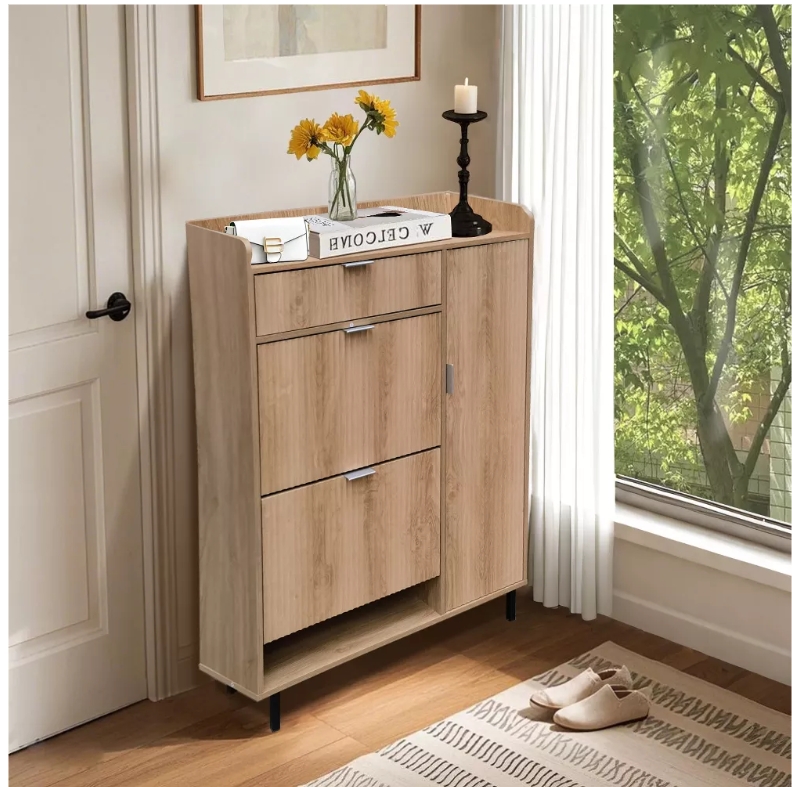
In today’s furniture market, a shoe cabinet is no longer just a basic storage item. For importers, wholesalers, and online sellers, selecting the right shoe storage cabinet means balancing design trends, space efficiency, durability, and supply-chain reliability. Especially in urban markets across Europe and North America, compact living drives demand for a narrow shoe cabinet that fits hallways, entryways, and small apartments without compromising style.
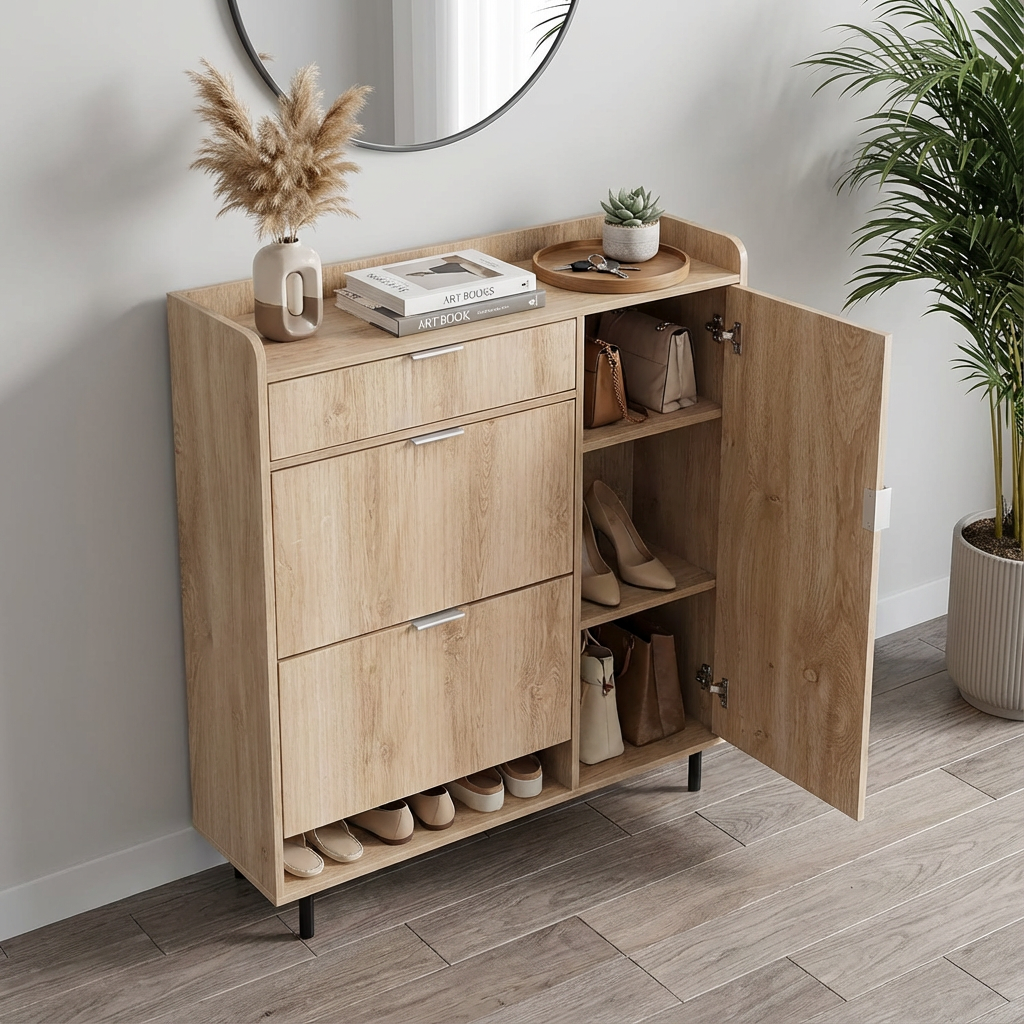
This guide explains how B2B buyers can choose the right shoe cabinet with doors for long-term sales performance, brand positioning, and operational efficiency.
1. Understand Market Demand by Application
Before choosing a product, B2B buyers should clearly define where the hallway shoe storage will be used.
Residential apartments: Slim-depth narrow shoe cabinet designs (20–30 cm depth) sell well in city apartments.
Rental and project markets: Simple, durable shoe storage cabinet models with easy assembly reduce after-sales risk.
Lifestyle retail & e-commerce: A modern shoe cabinet with doors offers a clean look, ideal for lifestyle imagery and online conversion.
Understanding the end-use scenario helps buyers select the right dimensions, structure, and material mix.
2. Choosing the Right Structure and Dimensions
Structure is a key factor when sourcing a shoe cabinet for B2B distribution.
Depth control: A well-designed narrow shoe cabinet maximizes storage while keeping a slim profile for hallways.
Internal layout: Adjustable or tilted shelves improve capacity inside a shoe storage cabinet.
Door configuration: A shoe cabinet with doors hides clutter and fits minimalist interiors, which are popular in European markets.
For B2B buyers, standardized dimensions also mean better container loading and predictable packaging costs.
3. Materials That Balance Cost and Durability
Material choice directly affects pricing, quality perception, and compliance.
Engineered wood (MDF or particle board): Common for shoe storage cabinet production, offering stable quality and consistent finishes.
Solid wood legs or accents: Often used to upgrade a shoe cabinet visually without significantly increasing cost.
Metal hardware: Improves durability for frequently opened shoe cabinet with doors.
For importers, material consistency ensures reliable mass production and easier quality control.
4. Design and Finish for Target Markets
A successful hallway shoe storage product must match local design preferences.
Neutral finishes (oak, walnut, matte white, black) perform best across multiple markets.
Minimalist lines make a narrow shoe cabinet adaptable for both living rooms and entryways.
Hidden handles or push-open doors enhance the premium feel of a shoe cabinet with doors.
B2B buyers benefit from designs that can be slightly customized—color, legs, or handles—without redesigning the full structure.
5. Packaging, Assembly, and Logistics Considerations
Beyond appearance, operational efficiency is critical.
Flat-pack design lowers shipping costs for every shoe storage cabinet.
Clear installation logic reduces customer complaints for online sellers.
Drop-tested packaging protects the shoe cabinet during long-distance shipping.
For wholesalers and importers, these details directly impact margins and customer satisfaction.
6. Customization Opportunities for Private Label Buyers
One advantage of sourcing a shoe cabinet directly from a manufacturer is OEM/ODM flexibility.
Adjust depth to create a market-specific narrow shoe cabinet.
Modify internal shelves for different shoe sizes.
Customize finishes, logos, or packaging for branded shoe storage cabinet programs.
These options allow B2B buyers to differentiate their hallway shoe storage range without high development risk.
7. Long-Term Value for B2B Buyers
A well-designed shoe cabinet with doors is a repeat-sale product. It complements other living room or entryway furniture and fits naturally into collections. For online sellers, a narrow shoe cabinet often becomes a high-conversion SKU due to its practicality and universal demand.
By focusing on structure, materials, design, and logistics, buyers can build a reliable shoe storage cabinet lineup that performs across multiple sales channels.
Choosing the right shoe cabinet is not just about style—it’s about understanding space constraints, production feasibility, and long-term market demand. A carefully selected narrow shoe cabinet, combined with practical hallway shoe storage design and reliable manufacturing, helps B2B buyers reduce risk and increase profitability.
Looking to develop or customize a shoe cabinet with doors for your market?
Our team works closely with global B2B partners to create scalable shoe storage cabinet solutions tailored to your target customers. Feel free to reach out and explore how we can support your next collection.