
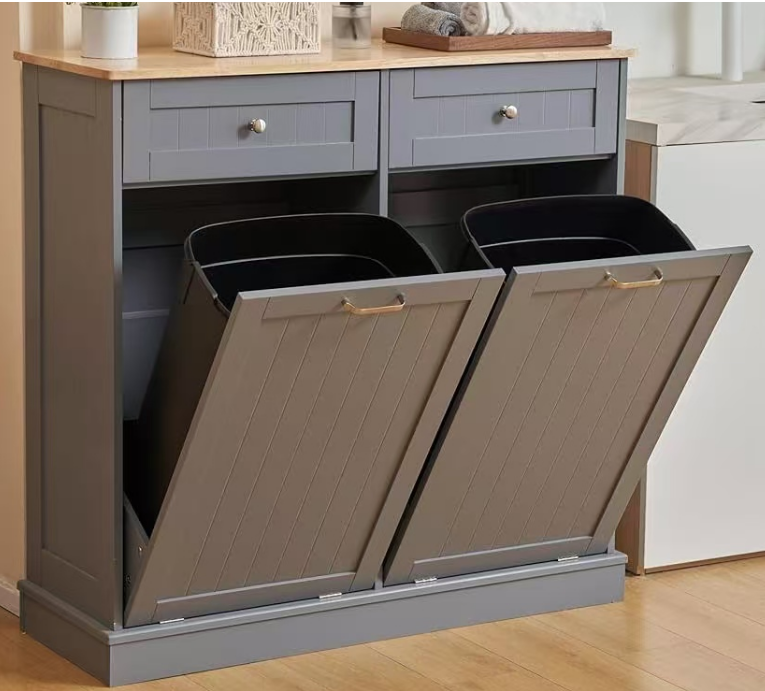
Home Design Trends 2026: Data-Driven Insights for Modern Trash Cabinet Solutions
In global home furniture markets, design trends are increasingly supported by data, not just aesthetics. For B2B buyers and importers, categories like the trash cabinet are now evaluated based on functionality, dimensions, materials, and long-term market performance.
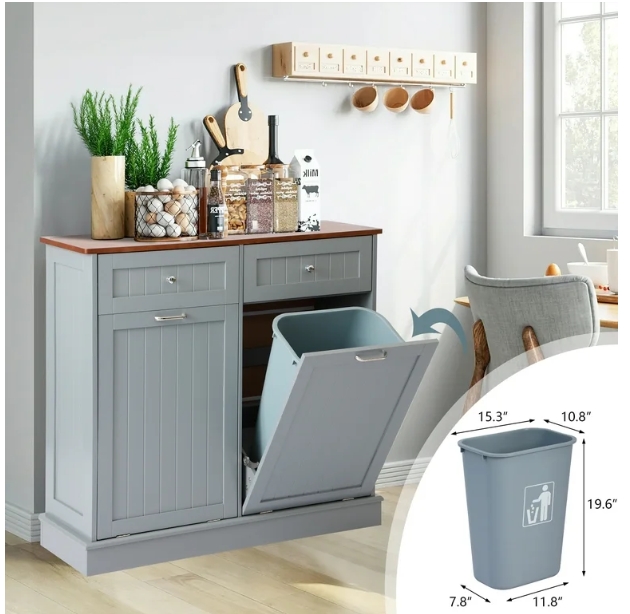
According to industry reports, the global kitchen storage furniture segment is growing at an estimated 4–6% CAGR, driven by kitchen renovations, compact urban housing, and demand for integrated storage solutions. Within this segment, the trash can cabinet is emerging as a standard configuration rather than an optional accessory.
1. Modern Minimalism: Standardized Dimensions and Clean Integration
Minimalist kitchen design emphasizes visual simplicity and hidden functionality. This directly affects how a kitchen trash cabinet is designed and specified.
In mainstream European and North American markets, commonly accepted cabinet parameters include:
Cabinet width: 300–450 mm (12"–18")
Cabinet depth: 450–560 mm
Cabinet height: 600–720 mm
A well-proportioned trash bin cabinet is expected to align seamlessly with base kitchen cabinets, allowing retailers and installers to integrate it without additional customization costs.
For B2B buyers, standardized sizing reduces SKU complexity and simplifies inventory planning across multiple markets.
2. Sustainability: Materials, Durability, and Lifecycle Performance
Sustainability is no longer a branding concept—it is a procurement requirement. A modern trash receptacle cabinet is expected to balance eco-friendly materials with long service life.
Typical material configurations include:
Board: E1 or CARB P2 MDF / particle board, 15–18 mm thickness
Metal frame: Powder-coated steel, 0.8–1.2 mm thickness
Slides: Load capacity 25–35 kg for pull-out systems
From a B2B perspective, durability metrics matter. Cabinets designed for 50,000+ open/close cycles significantly reduce after-sales claims in e-commerce and project channels.
A sustainable trash cabinet is therefore defined not only by materials, but by how long it performs reliably in daily use.
3. Smart Functionality: Mechanical Efficiency Over Electronics
While smart homes continue to evolve, most buyers prefer low-risk, mechanical intelligence for utility furniture. For a trash can cabinet, practical features outperform complex electronics.
High-demand functional upgrades include:
Soft-close pull-out rails
Dual or triple bin configurations (for waste separation)
Removable inner bins for easy cleaning
These features increase perceived value without requiring electrical certification, making the trash bin cabinet suitable for cross-border distribution and online sales.
4. Market Demand: Why Trash Cabinets Are a Stable B2B Category
Unlike trend-driven decorative furniture, the kitchen trash cabinet benefits from consistent replacement and renovation demand.
Key B2B advantages include:
Low seasonality compared to living room furniture
High attachment rate in kitchen renovation projects
Easy extension into private label programs
For importers and online sellers, the trash receptacle cabinet offers predictable volume potential and strong compatibility with modular kitchen collections.
5. OEM Customization: Controllable Parameters for Scalable Programs
Customization remains essential for B2B buyers, but it must stay within controllable manufacturing parameters. For trash cabinet OEM programs, common adjustable elements include:
Cabinet width and internal bin size
Single-bin vs. dual-bin layout
Surface finish (laminate, foil, melamine)
By keeping the core structure unchanged, manufacturers can support multiple SKUs while maintaining cost efficiency and stable quality output.
For B2B buyers, importers, and online sellers, selecting a well-engineered trash can cabinet means aligning with market demand, reducing operational risk, and supporting long-term growth in kitchen storage collections.
If you are evaluating trash cabinet specifications or exploring OEM solutions tailored to your market standards, exchanging technical parameters early can help ensure smoother sourcing and product rollout.