
Navigating the Complexity of Material Sourcing in Furniture Retail
For e-commerce category managers and furniture importers, curating a profitable living room product line requires evaluating more than just aesthetic trends. Selecting a coffee table program that aligns with digital consumer expectations involves analyzing material trade-offs, target demographics, and logistical constraints. When global brands plan their seasonal catalog updates, they must decide between the classic weight of timber, the sleek reflection of glass, and the industrial structural stability of metal frames to capture specific market segments.
Balancing these material choices directly affects a brand's overhead costs, return rates, and shipping damage profiles. Making the wrong choices regarding raw materials or construction methods can lead to structural failures, high return rates from end consumers, and narrow profit margins. This guide offers supply chain managers a systematic approach to selecting and evaluating residential central tables optimized for international multi-channel distribution.
E-Commerce Market Shifts and Volumetric Logistics Data
The retail home landscape continues to evolve as more consumers purchase large furniture pieces through digital storefronts. According to recent furniture logistics estimates, living room center tables represent one of the fastest-growing residential furniture segments online, driven by urban space optimization trends. Concurrently, international parcel delivery guidelines indicate that spatial efficiency and flat-pack compatibility now account for over 35% of total cross-border fulfillment expenses.
To maintain healthy margins, online retail brands must move away from pre-assembled architectural items toward precision-engineered knock-down (KD) configurations. For instance, flat-pack shipments can fit up to three times more product volume into standard 40ft High Cube containers than pre-assembled variations, significantly lowering ocean freight metrics per unit. Sourcing teams must prioritize structural components that optimize these dimensional boundaries without sacrificing stability during consumer home assembly.
Material Performance Analysis: Wood, Glass, and Metal Frames
Selecting a reliable wood coffee table line requires analyzing density profiles and surface sealing techniques. E-commerce category managers should source high-density engineered panels, such as E1-grade Medium Density Fiberboard (MDF), finished with durable melamine veneers and impact-proof PVC edge banding
[E1 MDF Core Panel] ──> [Moisture-Resistant Melamine] ──> [Impact-Proof PVC Edging] ──> Stable Freight Profile
For ultra-minimalist or industrial product lines, a modern coffee table often incorporates robust structural steel sub-frames rather than thin-gauge alternative metals
Geometrical Footprints and Parcel Distribution Standards
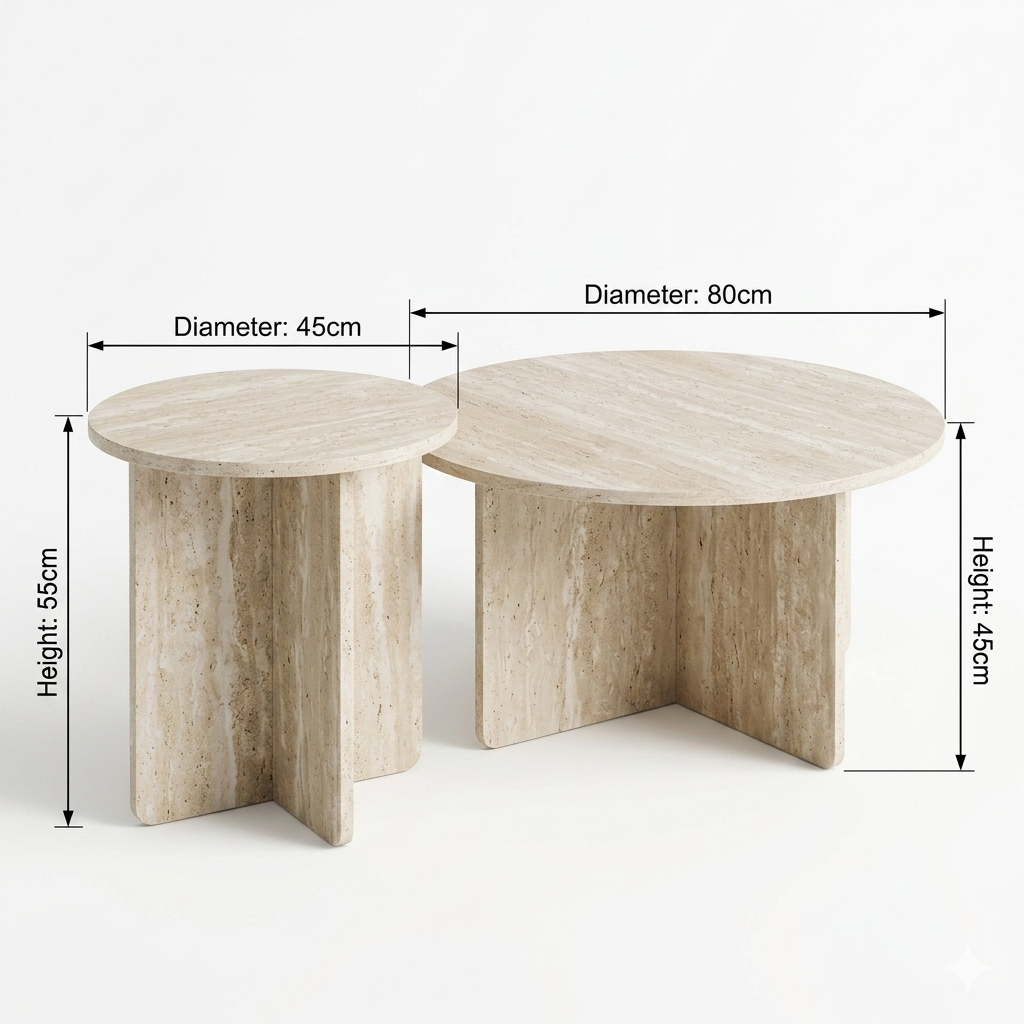
The visual layout of a living room catalog often shifts between rectangular structures and circular footprints based on shifting consumer demands. Incorporating a round coffee table or an elegant round cocktail table into online inventory helps retailers target apartments and small living spaces where fluid traffic flow is essential. Circular geometric profiles naturally mitigate the corner-impact damage risks common with sharp rectangular furniture blocks during standard courier handling.
From an engineering perspective, a nesting multi-table format allows distinct structural dimensions to collapse into a single flat pack, maximizing warehouse storage efficiency. Sourcing teams must verify that all leg assemblies feature integrated, adjustable levelers to keep the unit stable on uneven flooring, directly eliminating a major cause of negative online product reviews.
Strategic B2B Supply Chain and MOQ Guidelines
Evaluating a manufacturing partner's quality control framework requires examining their physical testing protocols. For private label buyers and OEM brands, suppliers must perform standardized automated testing covering fastener torque capacity, hinge extension cycles, and load capacity
| Operational Parameter | Targeted B2B Supply Chain Benchmark |
| Substrate Compliance | FSC-Certified E1 Grade Laminated Boards |
| Metal Frame Coating | Anti-Rust Electrostatic Powder Coating |
| Packaging Protocol | ISTA-1A / 3A Single-Parcel Drop Tested |
| MoQ Entry Tier | 100 to 200 units per color variation |
A realistic minimum order quantity (MOQ) structure for custom furniture manufacturing typically ranges from 100 to 200 units per color option
Focused FAQ Section
Q: What are the main benefits of sourcing an E1 MDF wood coffee table?
A: An E1 MDF wood coffee table provides excellent structural stability and cost efficiency for e-commerce shipping compared to solid lumber
Q: Why should an online retail brand prioritize a round coffee table format?
A: A round coffee table naturally optimizes spatial flow in compact urban apartments, making it a high-demand retail category. Additionally, circular outer contours lack sharp corners, which significantly lowers the risk of structural damage during transit through e-commerce parcel networks.
Q: What structural benchmarks indicate a reliable modern coffee table supplier?
A: A reliable modern coffee table supplier uses precise multi-axis boring equipment for consistent fastener hole alignment
Q: How does a round cocktail table design save on fulfillment costs?
A: A round cocktail table design often utilizes smart nesting structures that fit into compact, flat-pack export cartons
If you're evaluating suppliers for coffee table collections, we're happy to share samples and production specs