
The Shift Toward Multi-Functional Residential Infrastructure
The blurring lines between residential living spaces and remote work environments have fundamentally redefined furniture procurement metrics. For global commercial buyers, tracking the rapid consumer transition from standard structural platforms to adaptive layouts is essential for catalog growth. Importing a functional lift top coffee table introduces specific technical requirements that differ significantly from static, non-mechanical furniture. Ensuring that your manufacturing partners can properly align mechanical mechanical arm tolerances with strict international transit durability standards is the key to minimizing high store return rates and preserving wholesale margins.
Market Realities: Tracking Spatial Optimization Metrics
According to industry estimates, multi-functional space-saving furniture lines face a projected compound annual growth rate exceeding 6.8% across European and North American retail networks over the next five years. Furthermore, e-commerce return data indicates that approximately 18% of early-generation lift-mechanism furniture variants encountered store returns due to localized panel warping or sudden hydraulic arm failures. B2B buyers can protect their supply chains by looking past low factory-gate pricing and focusing heavily on certified raw wood density and strict cycle-testing documentation.
Mechanical Precision and Hardware Safety Constraints
The core value proposition of a modern lift top coffee table with storage relies on the long-term durability of its internal structural hardware. Cheaper residential variants often utilize basic, lightweight tension springs that snap suddenly or create asymmetrical alignment issues across the top surface panel over time.
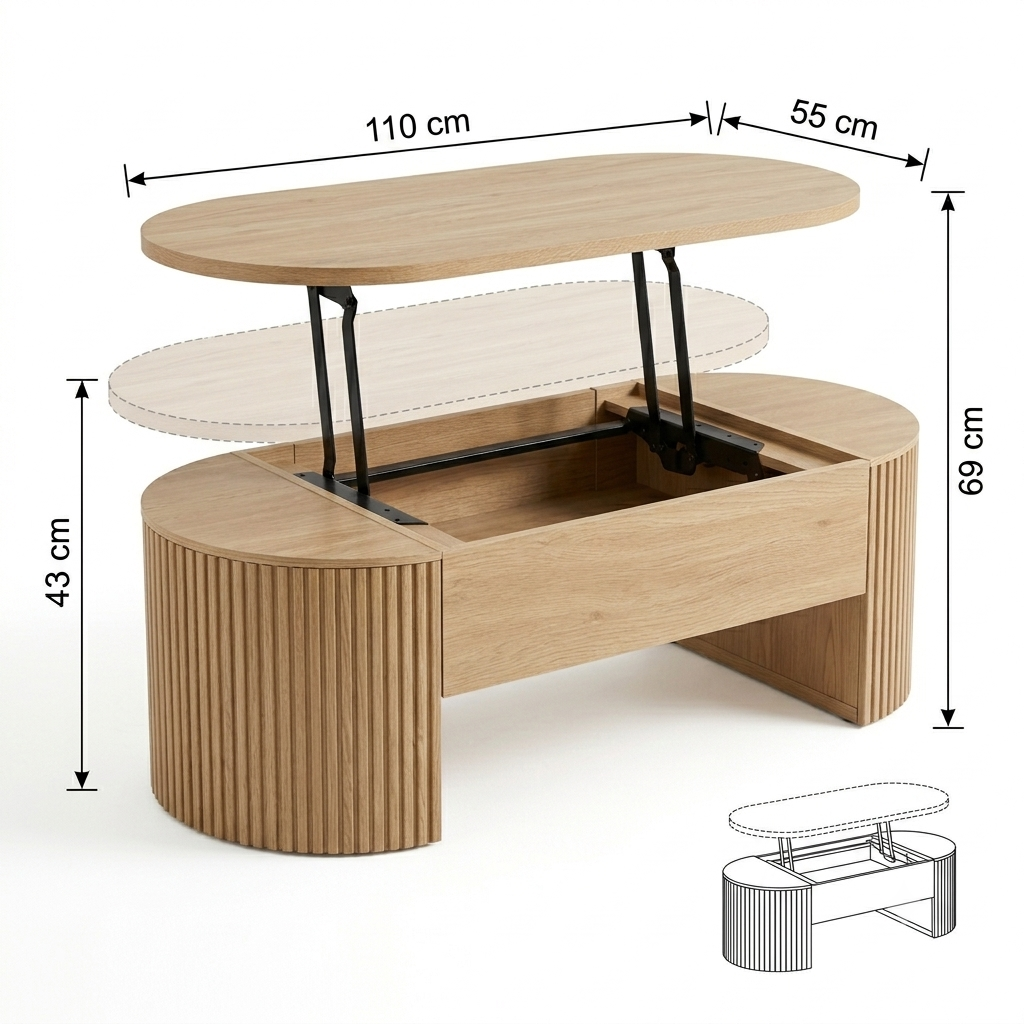
Commercial wholesale importers must explicitly source heavy-duty spring or smooth gas-hydraulic lifting brackets. These specialized mechanisms should be rated for a minimum of 10,000 consecutive open-close cycles under a standardized top load. The steel lifting linkages require thick, cold-rolled steel structures finished with clean electrostatic powder coatings to prevent corrosion during maritime transit and warehousing phases. A close look at precision engineering layouts, such as the distinct mechanical design featured in lift top coffee table , highlights how structured internal spacing isolates the gear hardware from the main internal storage sections.
Material Stability: Preventing Top-Panel Sagging
When an end-consumer shifts from casual relaxation to home-office computing, a coffee table with liftable top layout experiences sudden, unevenly distributed downward leverage. If the top board substrate lacks adequate internal structural density, noticeable centerline bowing and veneer cracking will appear within a few months of home use.
To guarantee product longevity, ensure your production factory utilizes stable, high-density, E1-grade engineered wood boards or CARB Phase 2 certified medium-density fiberboard (MDF). Applying a thick melamine overlay or a premium, scratch-resistant PVC veneer directly protects the composite wood core from accidental liquid spills and surface heat damage. The outer edges must be processed on automatic linear edge-banding machinery to ensure an airtight finish that blocks humidity from creeping inside the core layers.
Logistics Optimization: KD Flat-Pack Box Engineering
Shipping a large, oddly shaped item like a lift top cocktail table across global supply chains creates expensive parcel freight overhead if the structural layout is poorly optimized. Relying on oversized, pre-assembled factory cartons drains your ocean container storage space and triggers heavy logistics surcharges from regional last-mile couriers.
Vetting your design files to adhere to a strict knock-down (KD) flat-pack format allows factories to pack the main storage bins, mechanical linkages, and side panels into compact retail boxes. Importers must require standard ISTA 10-point drop testing on final export boxes before container loading. This rigorous stress protocol tests carton corners, edges, and wide faces against the drops typically encountered in automated courier sorting hubs, ensuring your items arrive intact.
Actionable Strategy: Sourcing Assessment Matrix for Importers
When auditing new international supply factories for an upcoming lift table top coffee table project, use a data-driven vetting matrix to evaluate long-term capabilities:
Agile MOQ Frameworks: Partner with suppliers offering a flexible production starting range of 100 to 200 pieces per item to allow for safe, incremental market validation tests.
In-Line Assembly Checks: Confirm that the quality control team performs physical test installations of the lifting arms before finishing to catch screw hole misalignments early.
Anti-Tip Base Balancing: Verify that the product's overall weight distribution incorporates a heavily reinforced lower shelf or wide-base grounding footprint to prevent the table from flipping forward when extended.
B2B Sourcing & Testing: Frequently Asked Questions
Q: What is the benefit of a gas-hydraulic system over a spring lift top coffee table?
A: Gas-hydraulic lifting systems provide a smooth, controlled ascent and descent that prevents the top panel from slamming down unexpectedly on consumer fingers. This premium setup reduces kinetic stress on internal structural joints, lowering warranty repair liabilities for bulk importers.
Q: How can retail buyers verify the formaldehyde emissions of an imported lift top coffee table with storage?
A: Importers should demand authentic, third-party laboratory test certificates proving the composite boards meet European E1 standards or North American CARB Phase 2 regulations. Trusted production partners will provide fully traceable documentation matching the exact raw material batches used on your assembly lines.
Q: Why should wholesale buyers select a flat-pack lift top cocktail table layout over pre-welded bases?
A: A completely knock-down flat-pack design drastically cuts cubic shipping volume, allowing you to maximize container volume and fit significantly more units into a standard 40-foot HQ shipping container. This reduction directly lowers your per-unit sea freight allocation and makes last-mile delivery more affordable.
Q: What surface finish works best for a commercial lift table top coffee table intended for e-commerce?
A: Specifying a high-quality wood-grain melamine or a moisture-resistant PVC veneer gives the table top excellent protection against surface scratches and heat. This non-porous layer allows automated edge-banders to seal the underlying board completely, preventing moisture swelling during sea transit.
Establish a Resilient Furniture Supply Chain
Scaling a profitable living room or home office furniture catalog requires a manufacturing partner who excels at structural safety testing, flat-pack parcel design, and international chemical certifications. If you are currently evaluating production factories for an upcoming coffee table with liftable top project or a multi-tier furniture line, our expert export division is here to help. Reach out to our team today to download detailed CAD layout files, coordinate physical material swatches, or request a clear wholesale commercial quote.