
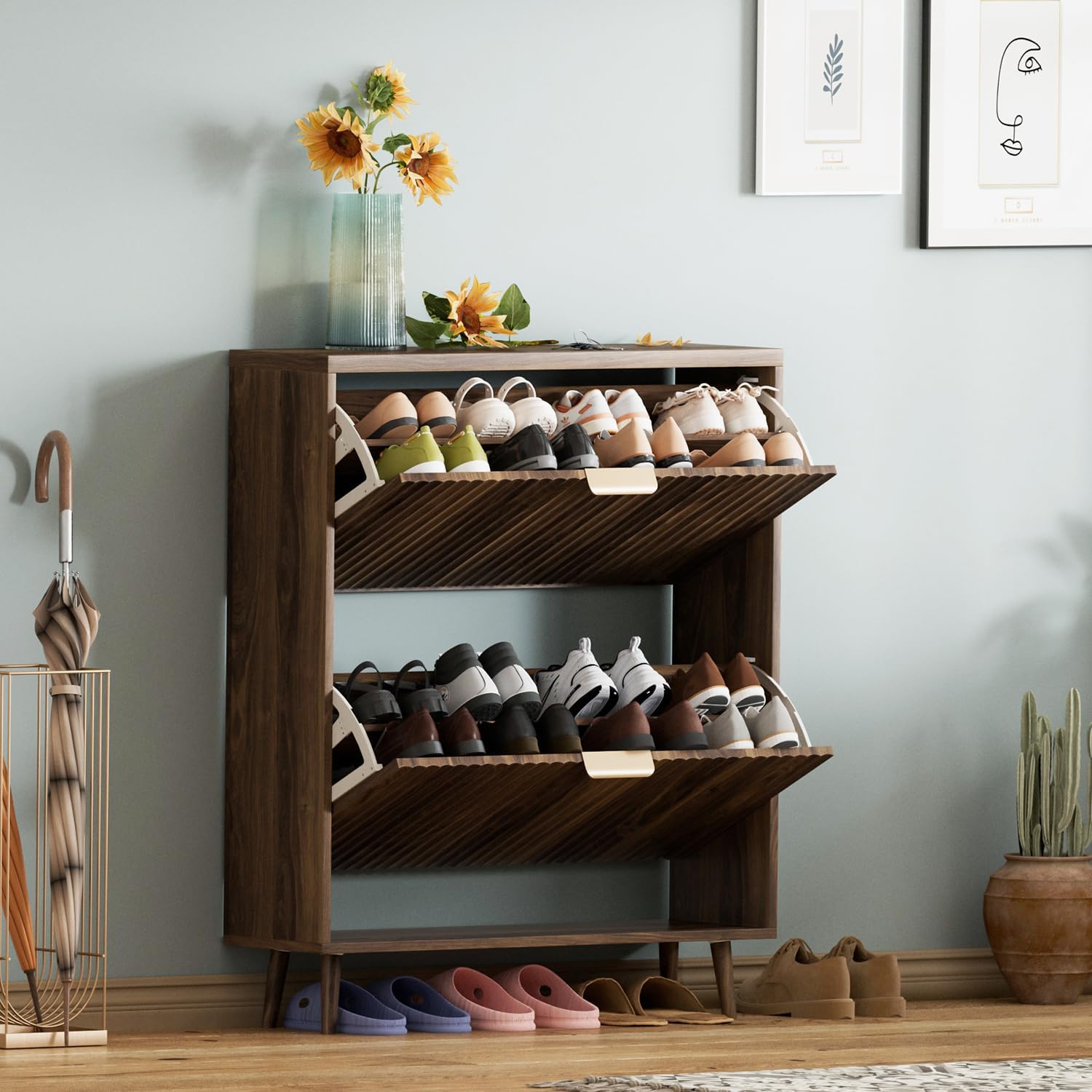
Entryway organization has become a core category in modern furniture retail. As urban homes become smaller, consumers increasingly demand compact and efficient cabinet storage for shoes that keeps hallways clean while maximizing storage capacity.
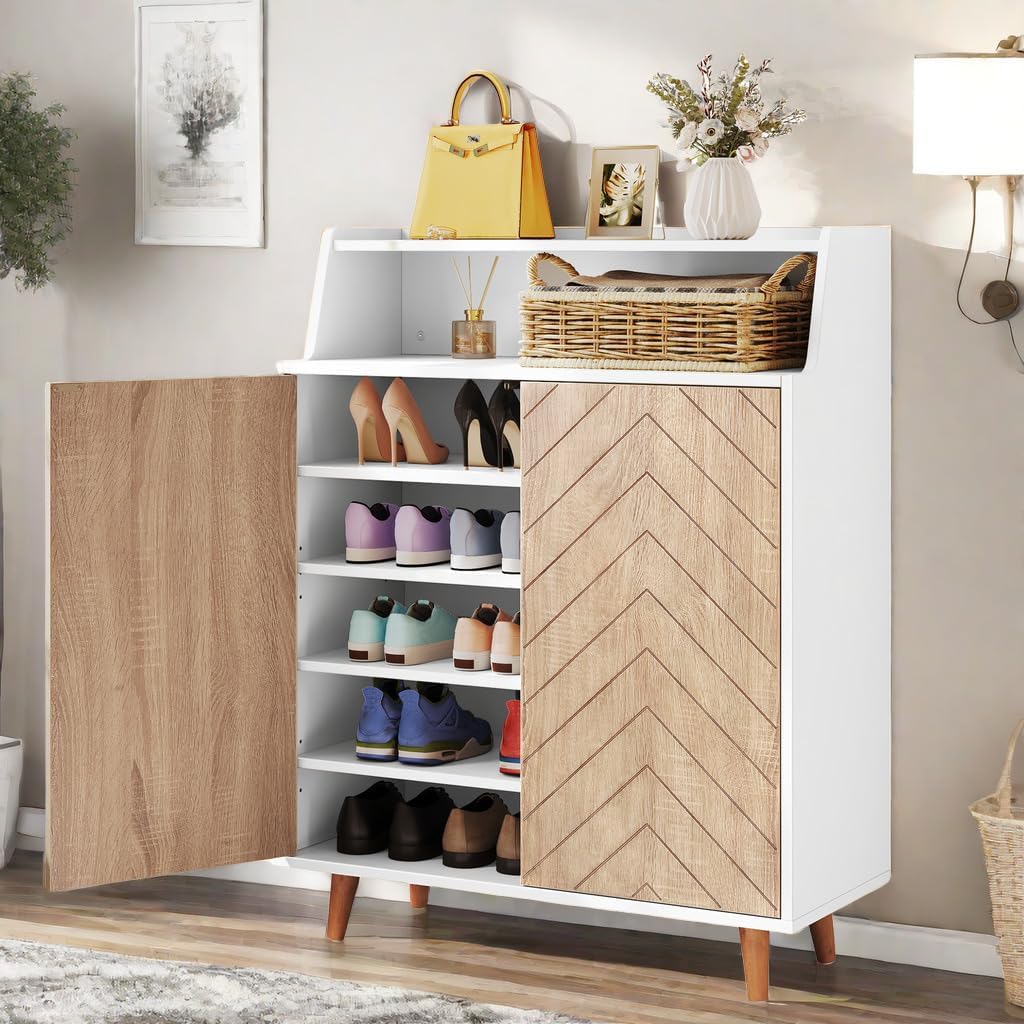
For importers, distributors, and online sellers, the most common decision is whether to offer flip-drawer shoe cabinets or a traditional shoe cabinet with doors. Both solutions serve the same purpose but perform differently in terms of capacity, size efficiency, and consumer preference.
Buying Guide: Shoe Cabinets with Flip Drawers vs Doors
1. Understanding Flip-Drawer Shoe Cabinets
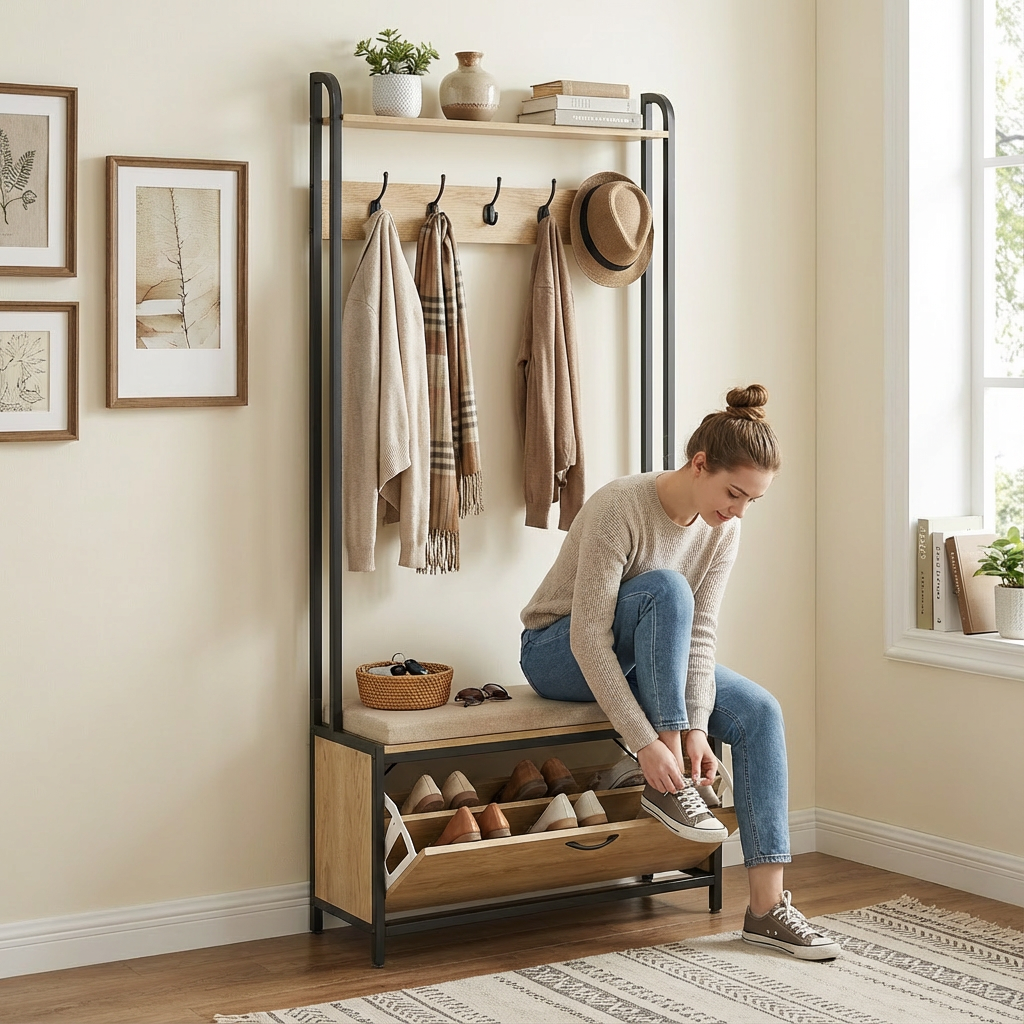
Flip-drawer systems are widely used in slim ikea shoe cabinate style furniture because they maximize storage in narrow spaces.
Instead of traditional shelves, angled compartments allow shoes to be placed vertically. This structure allows cabinets to maintain a depth of only 20–25 cm, making them ideal for compact entryways.
Typical specifications include:
| Parameter | Typical Range |
|---|---|
| Cabinet depth | 20–25 cm |
| Cabinet width | 70–100 cm |
| Storage capacity | 10–16 pairs |
| Assembly time | 20–30 minutes |
Because of their slim design, flip-drawer models are often considered the most efficient entry way shoe storage cabinet option for small apartments.
Many consumers familiar with ikea shoe cabinate products are already comfortable with this format, making it a safe choice for furniture retailers.
2. Advantages of Flip-Drawer Cabinets
A shoe cabinet and storage design with flip drawers offers several advantages.
Space Efficiency
The angled compartment design allows a narrow cabinet to store more shoes than standard shelves.
Clean Appearance
Even in small entryways, a slim cabinet storage for shoes keeps footwear hidden while maintaining a minimalist look.
E-commerce Friendly Structure
Flip-drawer cabinets typically require fewer large panels, which helps maintain manageable shipping weights. Most products fall within 18–22 kg gross weight, suitable for flat-pack logistics.
Because of these factors, flip-drawer cabinets are frequently selected as a core shoe cabinet and storage product for online marketplaces.
3. Traditional Shoe Cabinets with Doors
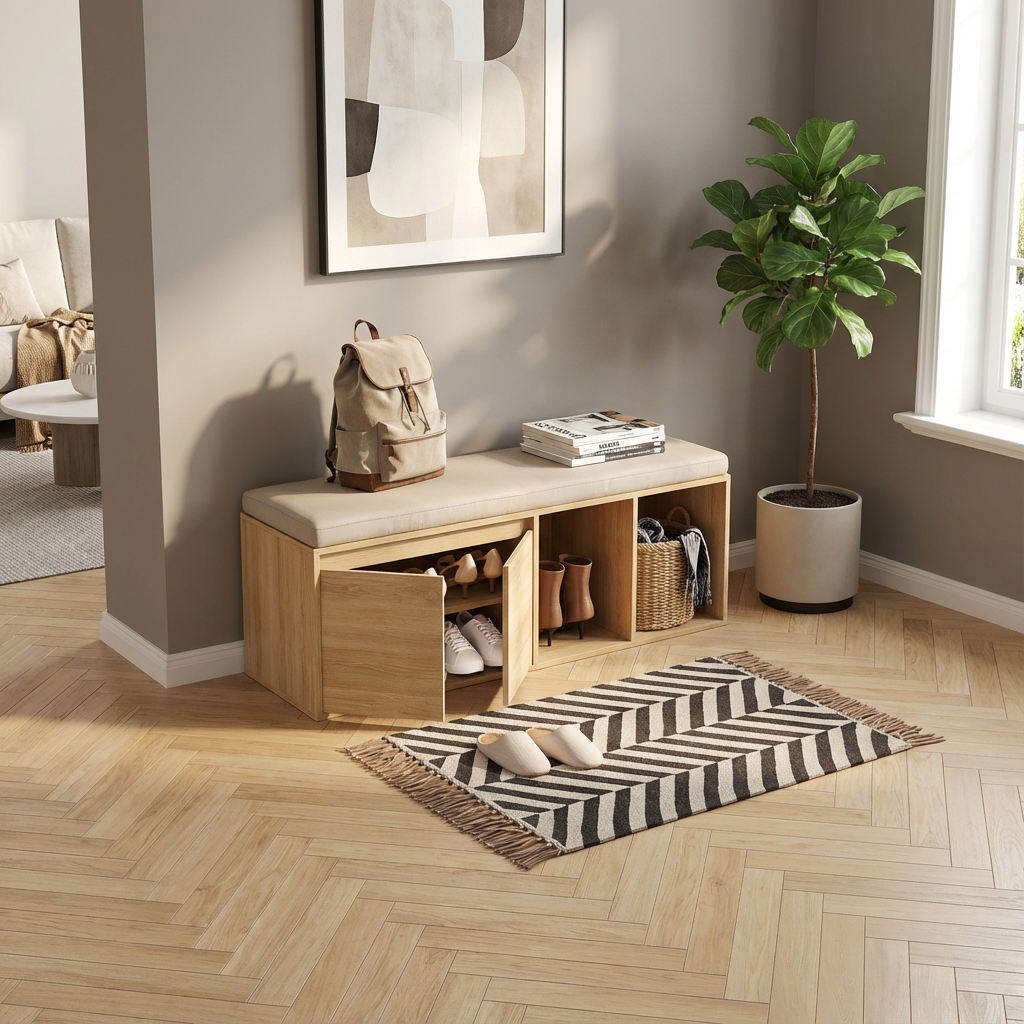
A shoe cabinet with doors uses conventional shelving behind hinged doors. While slightly deeper, this design offers flexibility for different shoe sizes.
Typical cabinet specifications include:
| Parameter | Average Range |
|---|---|
| Depth | 30–35 cm |
| Width | 80–110 cm |
| Capacity | 12–20 pairs |
| Shelf adjustability | 3–5 positions |
For families with boots, sneakers, and high-top shoes, a deeper cabinet storage for shoes may provide better versatility than angled compartments.
Additionally, the structure of a shoe cabinet with doors often feels sturdier to consumers because of its full cabinet body.
4. Capacity Comparison: Flip Drawers vs Doors
When comparing storage efficiency, both structures have advantages depending on available space.
| Feature | Flip Drawer Cabinet | Door Cabinet |
|---|---|---|
| Depth | 20–25 cm | 30–35 cm |
| Capacity | 10–16 pairs | 12–20 pairs |
| Space efficiency | Very high | Medium |
| Shoe size flexibility | Moderate | High |
In narrow hallways, a slim entry way shoe storage cabinet with flip drawers is usually preferred. In larger entryways, a deeper shoe cabinet with doors can provide greater versatility.
5. Materials and Structural Durability
Material selection is another critical factor for B2B buyers sourcing shoe cabinet and storage furniture.
Common material combinations include:
| Component | Specification |
|---|---|
| Frame | Steel tube 20×20 mm |
| Panels | MDF 12–15 mm |
| Finish | Melamine or PVC edge banding |
| Load capacity | 30–50 kg |
Steel-wood construction has become increasingly popular because it improves durability compared with basic particleboard structures.
For high-volume retailers, using stable materials in an entry way shoe storage cabinet can reduce customer returns and improve product ratings.
6. Choosing the Right Product for Your Market
When developing an entryway furniture collection, the most successful retailers often combine both formats.
A slim ikea shoe cabinate style flip cabinet works well for:
urban apartments
narrow hallways
minimalist interior design
A deeper shoe cabinet with doors performs better for:
family homes
mixed shoe sizes
premium entryway furniture collections
Offering both formats ensures your product lineup covers a wider range of consumer needs.
Modern entryway storage requires a balance between space efficiency, capacity, and visual design. A slim ikea shoe cabinate style flip cabinet offers exceptional space efficiency, while a deeper shoe cabinet with doors provides greater flexibility for different shoe types.
For furniture brands, importers, and online sellers, the most effective strategy is often to include both styles within a single shoe cabinet and storage collection. This approach allows retailers to meet diverse consumer needs while maintaining consistent design language across entryway furniture.
If you are sourcing a new entry way shoe storage cabinet for your product line, working with manufacturers experienced in flat-pack cabinet storage for shoes design can help optimize shipping efficiency, product durability, and long-term retail performance.