


Once furniture production is completed and the finished pieces have passed inspection, the products move to the packing area.
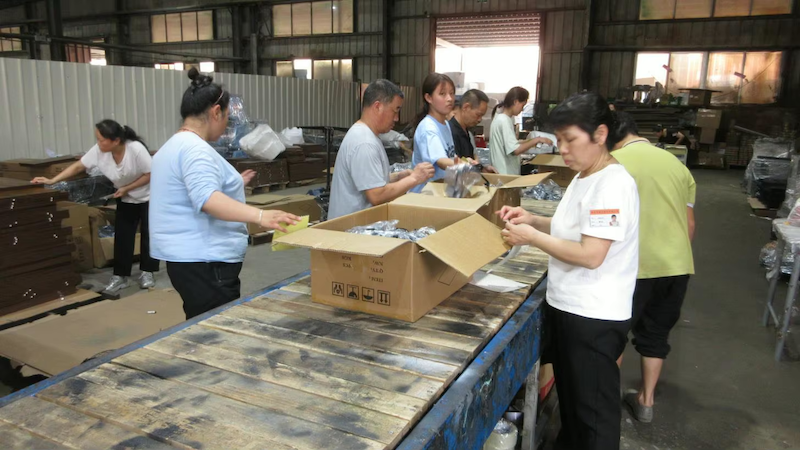
This part of the factory may look simple. Workers put the parts into bags, add protection, place everything into a carton and seal it. But there are quite a few details to check along the way.
A small mistake at this stage can cause trouble later. A loose metal frame can scratch a panel. Missing hardware can make assembly difficult. A carton that is not packed properly may also arrive with damaged corners.
Packing Starts with the Finished Product
Before a product enters the packing line, the team checks what needs to go inside the carton.
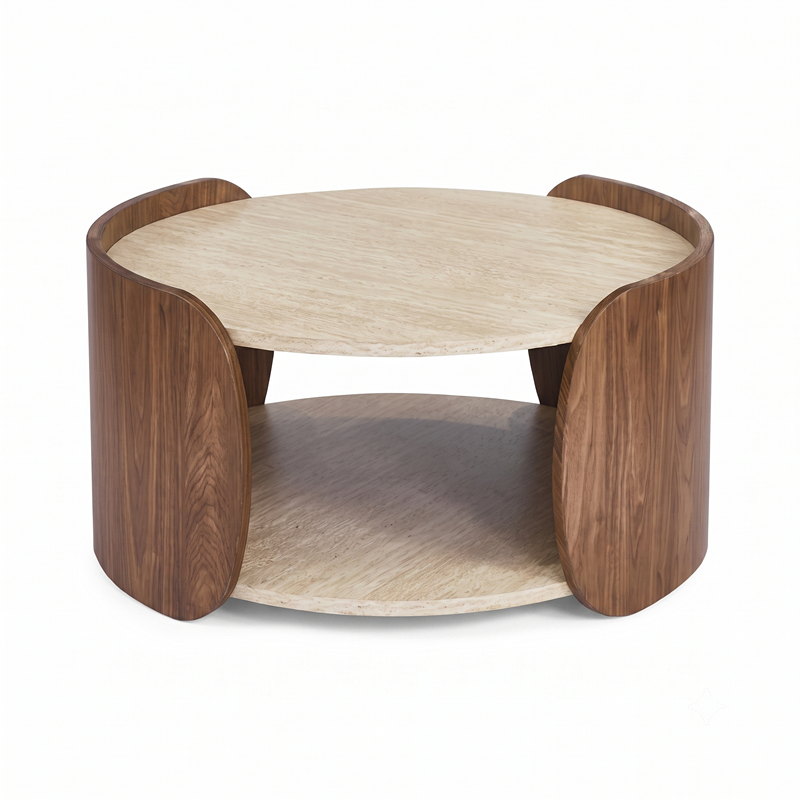
For Living Room Furniture, this may include table tops, metal frames, shelves, doors, screws and other fittings. Finished surfaces are protected before the parts are placed together.
Foam, PE bags, cardboard sheets and corner protectors are commonly used according to the product structure. The purpose is straightforward: keep the finished surface from rubbing against another part during handling and transportation.
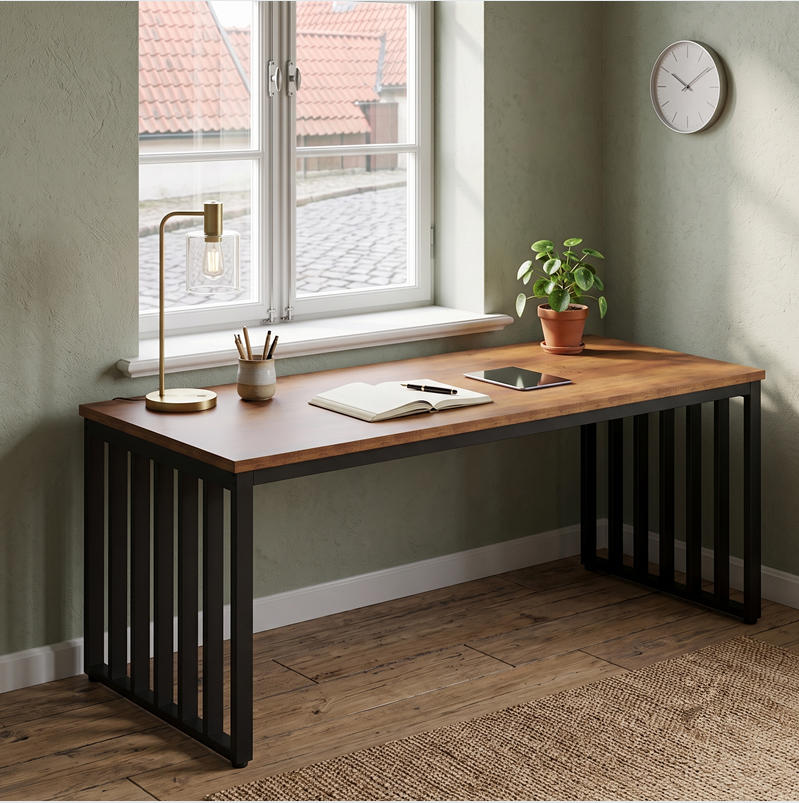
For Home Office Furniture, desks, cabinets and shelving products can contain a large number of individual parts. These parts are normally arranged in a fixed order so that they are easier to check during packing and easier to find during assembly.
Hardware Should Not Be an Afterthought
Furniture may look complete in the carton, but the small hardware parts are just as important.
For Kitchen Furniture, hinges, screws, handles, connectors and other fittings need to be counted and packed properly. Depending on the product, hardware may be placed in separate bags and identified according to the assembly instructions.
The same approach can be used for Entry Furniture. A shoe cabinet or entryway storage unit may contain several panels and different types of fittings. Keeping these parts organized makes the unpacking and installation process much easier.
Packing is also checked against the approved product specification. If a buyer has requested a particular carton mark, barcode, label or instruction sheet, these items need to be included before the carton is closed.
Packing Bedroom Furniture for Export
Bedroom Furniture often contains panels with finished edges and visible surfaces. Bedside tables, cabinets and dressers therefore need careful protection during packing.
Workers check the position of foam and cardboard protection before closing the carton. The internal parts should not move around excessively after the package is sealed.
The carton itself also needs to be suitable for export. Its size, strength and internal arrangement all affect how the product performs during loading, transportation and unloading.
The Final Step Before Loading
After the packing is completed, cartons are checked before they are moved to the finished goods area.
For an export furniture factory, packing is the last hands-on step before the products enter the logistics process. By this point, the furniture has already gone through cutting, drilling, welding, assembly and inspection. The packing team has one job left — make sure the finished product reaches the customer in good condition.
At Deluxstar, we handle packing as part of the overall furniture manufacturing process. With more than 15 years of export experience, five production lines and over 100,000 m² of factory space, we support OEM and ODM orders for wholesalers, brands and online furniture sellers.
Whether it is Living Room Furniture, Home Office Furniture, Kitchen Furniture, Entry Furniture or Bedroom Furniture, the last carton leaving the packing area represents the final check before shipment.